
Which Nissan SUVs Are Best for Comfort?
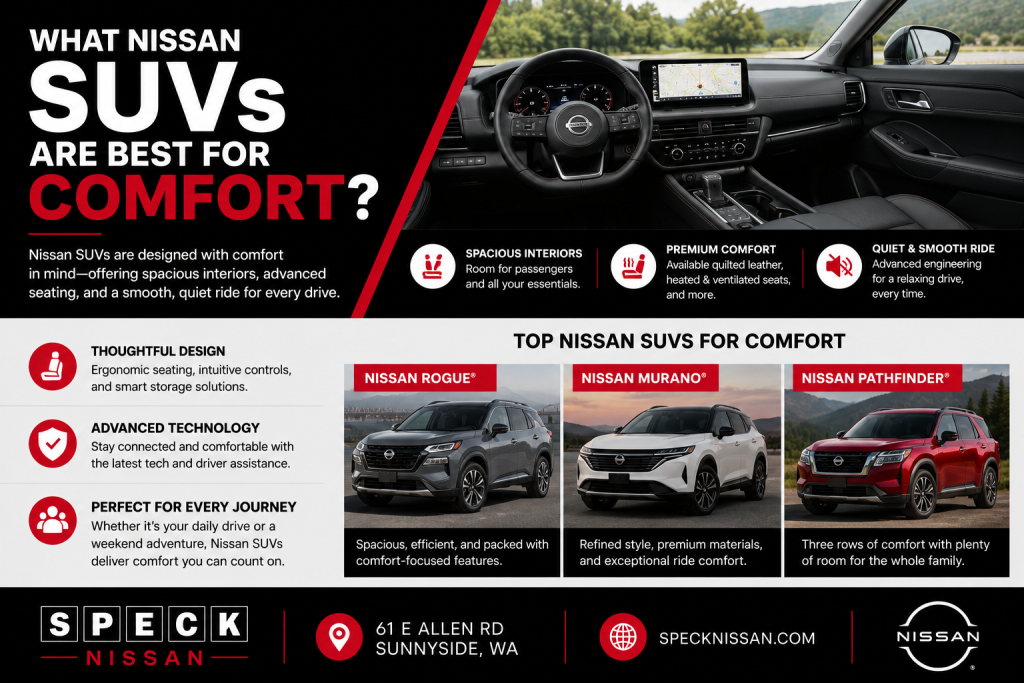
Whether you’re commuting across the Yakima Valley, making a long drive over the Cascades, or just running errands around Sunnyside, the comfort of your SUV matters every single day. Nissan’s SUV lineup spans from practical compact crossovers to full-size luxury-grade flagships — and each one brings its own approach to comfort. Here’s a breakdown of how every Nissan SUV ranks for ride quality, seating, and the features that make long drives feel shorter.
Quick Comfort Comparison
| Model | Seating | Heated Seats | Ventilated Seats | Massaging Seats | Zero Gravity Seats |
|---|---|---|---|---|---|
| Murano | 5 | ✓ Standard | Available | Available | ✓ Standard |
| Armada | 7–8 | ✓ Standard | Available | — | ✓ Standard |
| Pathfinder | 7–8 | ✓ Standard | — | — | ✓ Standard |
| Rogue | 5 | Available | — | — | ✓ Standard |
| Kicks | 5 | Available | — | — | — |
Nissan Murano: Most Comfortable
Midsize 2-Row · 5 Passengers · Comfort-First Design
The Murano is the undisputed comfort champion of the Nissan SUV lineup. Its interior philosophy is based on flair and everyday comfort — the architecture of the seats, dashboard, and driving position all work together to prioritize comfort and simplicity. The redesigned 2025+ Murano brings a breathtaking dual 12.3″ display, leather-appointed massaging seats, ambient LED lighting, and a panoramic moonroof. It’s the Nissan SUV built for drivers who spend significant time behind the wheel and want every mile to feel refined.
- ✓Zero Gravity front seats — engineered to reduce fatigue on long drives by mimicking a near-weightless position
- ✓Available massaging front seats — a true luxury feature that makes long Yakima Valley commutes genuinely relaxing
- ✓Available ventilated & heated front seats — essential for Eastern Washington’s hot summers and cold winters
- ✓Dual 12.3″ Monolith Display — seamlessly integrated screens for infotainment and instrumentation
- ✓Available Bose® premium audio — concert-quality sound for every drive
- ✓ProPILOT Assist — lane-centering and adaptive cruise control for relaxed highway driving
- ✓Panoramic moonroof — available on upper trims, flooding the cabin with natural light
Best for: Couples, commuters, and empty nesters who want the most refined, comfort-focused Nissan SUV — without needing three rows.
Nissan Armada Best Full-Size Comfort
Full-Size 3-Row · Up to 8 Passengers · Flagship Power & Space
The Armada is the most spacious SUV in Nissan’s lineup — with available leather-appointed seating, optional second-row captain’s chairs, three rows of seats, and ample storage for the whole family. The all-new Armada is powered by a 3.5L twin-turbocharged V6 producing 425 HP and 516 lb-ft of torque, so you’re never working hard to keep up with traffic — a quiet, effortless cruiser with the power to spare. Standard features include tri-zone automatic climate control, wireless smartphone integration, and seating for up to eight.
- ✓Zero Gravity seating across all rows — comfort for every passenger on every trip
- ✓Available ventilated & heated front seats — year-round comfort for Eastern Washington’s extreme seasons
- ✓Tri-zone automatic climate control standard — front, mid, and rear zones keep everyone comfortable
- ✓Available Bose® 13-speaker premium audio with Acoustic Waveguide Technology
- ✓425 HP twin-turbo V6 — effortless power means a smooth, relaxed driving experience at any speed
- ✓Available captain’s chairs in second row — more personal space and easier third-row access
Best for: Large families who want full-size space, a powerful and whisper-quiet highway cruiser, and premium comfort across all three rows.
Nissan Pathfinder Best Three-Row Family Comfort
Midsize 3-Row · Up to 8 Passengers · Family Sanctuary
The Pathfinder’s 3-row, 8-passenger seating was crafted to feel like a sanctuary after a long day — with tons of cargo space and available semi-aniline leather appointments. The optional tri-zone climate control ensures all passengers can be comfortable no matter where they sit, making it ideal for longer family road trips across the Yakima Valley and beyond. Its 284 HP V6 provides smooth, composed highway performance.
- ✓Zero Gravity front seats standard — engineered to reduce long-drive fatigue
- ✓Heated front seats standard on most trims
- ✓Available semi-aniline leather seating — soft, premium material across all three rows
- ✓EZ FLEX® 2nd-row seating system — easy third-row access without removing car seats
- ✓Available tri-zone automatic climate control
- ✓Available Bose® premium audio with 13 speakers
- ✓ProPILOT Assist for relaxed highway driving on I-82 and SR-240
Best for: Active families who need genuine three-row comfort for school runs, road trips, and everything in between — without stepping into a full-size SUV.
Nissan Rogue Best Compact Comfort
Compact 2-Row · 5 Passengers · Smart & Refined
The Rogue may be Nissan’s most practical compact SUV, but it brings genuine comfort credentials. Two Bose UltraNearfield™ speakers are built into the headrests and can be adjusted to fit any mood, creating a personal audio experience rarely found at this price point. Zero Gravity seats come standard, and available ProPILOT Assist 2.1 — Nissan’s most advanced hands-free highway tech — makes long commutes to Hanford or across the Tri-Cities genuinely relaxing.
- ✓Zero Gravity front seats standard — fatigue-reducing design on every trim
- ✓Available heated front seats
- ✓Bose® UltraNearfield™ headrest speakers — available personal audio built into the front seats
- ✓ProPILOT Assist 2.1 available — the most advanced hands-free highway driving system Nissan offers
- ✓12.3″ panoramic display available — large, clear touchscreen for easy navigation and infotainment
- ✓Motion-activated liftgate — hands-free convenience when loading groceries or gear
Best for: Commuters and smaller families who want a comfortable, well-equipped compact SUV with genuinely premium features at an accessible price point.
Nissan Kicks Best Entry-Level Comfort
Compact 2-Row · 5 Passengers · Efficient & Surprisingly Comfortable
The Kicks is Nissan’s most affordable SUV — and it’s more comfortable than its price suggests. The 2025 Kicks received 1.7 extra inches of shoulder room up front, 1.5 additional inches in the rear, and an extra 0.9 inch of rear seat knee room — meaningful upgrades that make the cabin feel noticeably less cramped. Available heated front seats, wireless CarPlay, and Nissan Safety Shield 360 are included at an entry-level price point.
- ✓Significantly increased shoulder and knee room for 2025+ — a meaningfully more comfortable cabin than before
- ✓Available heated front seats
- ✓Wireless Apple CarPlay & Android Auto standard
- ✓Nissan Safety Shield 360 standard — full suite of driver-assist safety features on every trim
- ✓Available Intelligent AWD for confident driving in Eastern Washington winters
Best for: First-time buyers, solo commuters, and budget-conscious drivers who want a comfortable, modern compact SUV without a premium price tag.
Come feel the difference in person.
The best way to find your most comfortable Nissan SUV is to sit in each one. Stop by your local Nissan dealer at Speck Nissan in Sunnyside — we’ll walk you through the lineup, let you compare the Zero Gravity seats to the Murano’s massaging seats, and help you find the right fit for your daily drive.
The information provided is for general informational purposes only and does not constitute legal, financial, or professional advice. While we strive to provide accurate and up-to-date information, we make no guarantees regarding the completeness, accuracy, or reliability of the information presented. Any action you take based on the context of this blog is strictly at your own risk. Always consult a qualified professional or specialist for advice specific to your situation. We are not responsible for any losses or damages arising from the use of this blog or its content.
What Is Kelley Blue Book — And What Is My Car Worth?
If you’ve ever shopped for a car, traded one in, or wondered what your vehicle is worth, you’ve probably come across Kelley Blue Book. It’s one of the most recognized and trusted names in the automotive industry — and for good reason. Whether you’re buying, selling, or trading in, understanding what Kelley Blue Book is and how it works can help you make a more confident, informed decision.
What Is Kelley Blue Book?
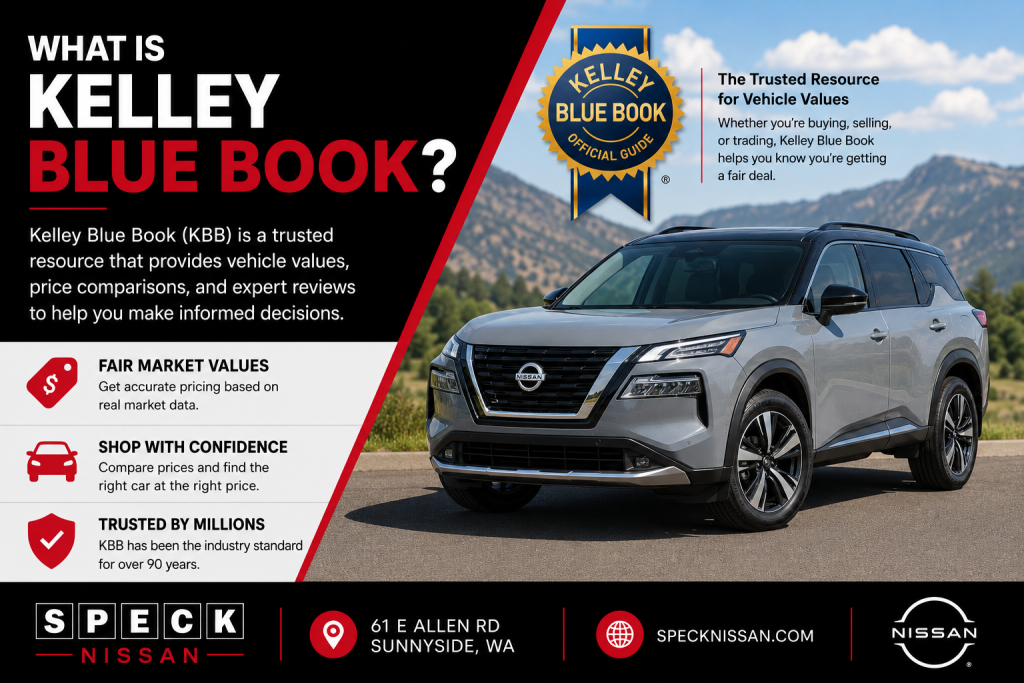
Kelley Blue Book — commonly known as KBB — has been a trusted source for vehicle pricing information since 1926. Originally a printed guide used by dealers and consumers to determine fair vehicle values, KBB has evolved into one of the most visited automotive websites in the country. Today it provides real-time vehicle valuations based on millions of data points including recent sales transactions, market demand, and regional pricing trends.
KBB is now owned by Cox Automotive — the same parent company as Autotrader and Cars.com — which gives it access to enormous amounts of real-world sales data. That data is what makes Kelley Blue Book values so widely trusted by both consumers and dealerships alike.
What Does Kelley Blue Book Actually Tell You?
KBB provides several different types of values depending on what you’re trying to do. The most commonly used are the Trade-In Value — what a dealer might offer for your vehicle — and the Private Party Value — what you might expect if selling directly to another person. There’s also the Instant Cash Offer, which is a real offer from dealers in your area based on your vehicle’s specifics.
For most car shoppers in the Yakima Valley and Tri-Cities area, the Trade-In Value is the most practical number — it sets a realistic baseline for what your current vehicle is worth when you’re ready to put it toward your next purchase.
What Factors Affect Your Kelley Blue Book Value?
Year, Make & Model
Newer vehicles generally hold more value. Some brands and models hold their value significantly better than others over time.
Mileage
Lower mileage typically means higher value. KBB uses average annual mileage as a benchmark — more miles than average lowers the value.
Condition
KBB uses condition ratings — Excellent, Very Good, Good, and Fair. Be honest: most vehicles fall in the Good range, not Excellent.
Options & Features
Packages like AWD, leather seating, sunroofs, and towing equipment can all add meaningful value to your KBB estimate.
Your Location
KBB adjusts values by region. A truck may be worth more in rural Eastern Washington than in a major metro — local market demand matters.
Service History
A documented maintenance history adds real credibility and value to your vehicle — especially when trading in at a dealership.
How to Check Your Car’s Kelley Blue Book Value
- Go to kbb.com and select “What’s My Car Worth” or “Trade-In Value.”
- Enter your vehicle’s year, make, model, and trim level. Have your VIN handy for the most accurate result.
- Enter your current mileage and select your vehicle’s condition honestly — Excellent, Very Good, Good, or Fair.
- Select any options or packages your vehicle has — AWD, sunroof, premium audio, towing packages, and so on.
- Enter your zip code so KBB can adjust the value for your regional market — Eastern Washington values may differ from national averages.
Ready to find out what your car is worth?
Use Kelley Blue Book as your starting point — and then bring it to Speck Nissan in Sunnyside. We’ll give you a real, transparent trade-in appraisal and show you how your KBB value applies toward your next vehicle. No pressure, no guesswork — just a straightforward number you can count on.
The information provided is for general informational purposes only and does not constitute legal, financial, or professional advice. While we strive to provide accurate and up-to-date information, we make no guarantees regarding the completeness, accuracy, or reliability of the information presented. Any action you take based on the context of this blog is strictly at your own risk. Always consult a qualified professional or specialist for advice specific to your situation. We are not responsible for any losses or damages arising from the use of this blog or its content.
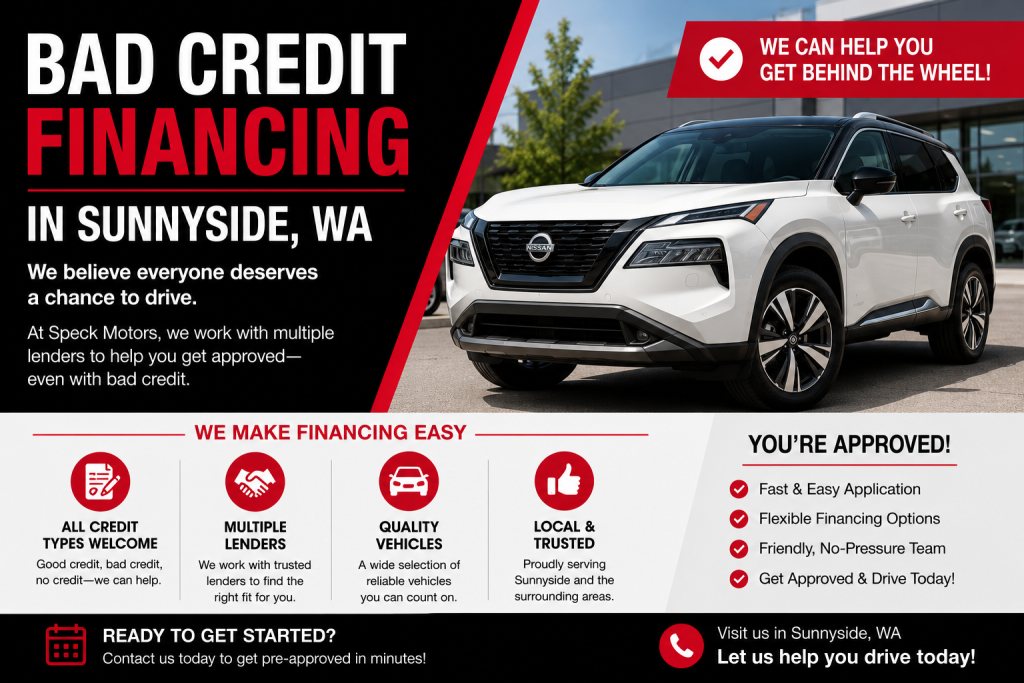
Getting turned down for financing elsewhere isn’t the end — we are here to find a solution.. At Speck Nissan, we are the Nissan dealership with bad credit financing options for almost every credit situation in Sunnyside, WA. Whether you have poor credit, no credit, or are rebuilding after a financial setback, our Nissan financing team is here to find a solution that works for you.
Nissan Financing Bad Credit Approval Options in Sunnyside, WA
Simply put, we believe everyone deserves reliable transportation — regardless of credit history. With that in mind, our bad credit Nissan financing team works with a wide network of lenders specializing in non-traditional financing situations, including:
- Poor or damaged credit
- No credit history
- First-time buyers
- Recent bankruptcy or repossession history
- ITIN holders without a Social Security Number
Here’s Exactly What Lenders Consider Bad Credit
Credit scores range from 300 to 850. Here’s how lenders typically categorize them:
- Exceptional — 800–850
- Very Good — 740–799
- Good — 670–739
- Fair — 580–669
- Poor (Bad Credit) — 300–579
Lenders typically flag any score below 580 as bad credit. That said, a score between 580–669 is fair and may still qualify for Nissan financing — though rates may vary. Keep in mind that credit score is just one factor. Stable income, employment history, down payment, and residency all strengthen your approval chances.
We Work With ITINs
Don’t have a Social Security Number? No problem. Our Nissan financing bad credit approval options in Sunnyside, WA are available for ITIN holders — and our bilingual team is ready to walk you through every step in English or Spanish.
What Documents Do You Need?
Before you come in, bring the following when you visit:
- ✓ Valid Photo ID — Driver’s license, passport, consular ID, or military ID
- ✓ Proof of Income — Recent pay stubs, bank statements, or tax returns
- ✓ Proof of Residence — Utility bill, lease agreement, or bank statement with your current address
- ✓ Proof of Insurance — Active auto insurance is required before finalizing your loan
Tips to Improve Your Approval Chances
- Put more money down — Reduces lender risk and improves approval chances
- Consider a co-signer — Opens additional Nissan financing options with better terms
- Choose a lower-priced vehicle — Lower loan amount means easier approval
- Show stable employment — Consistent employment is a strong positive signal to lenders
Why Choose Speck Nissan?
- Wide Lender Network — Lenders specializing in bad credit and non-traditional Nissan financing
- ITIN Accepted — Nissan financing bad credit approval options available without a Social Security Number
- Bilingual Team — Spanish-speaking team members ready to assist
- New & Used Nissan Inventory — Options at every price point
- No Judgment, No Pressure — Every customer deserves a fair shot at reliable transportation
Ready to Get Started?
Don’t let bad credit stand between you and a reliable Nissan. Bring your documents, come in with an open mind, and let our Nissan dealership with bad credit financing team find the right vehicle and payment for you. We serve the entire Yakima Valley and Tri-Cities area — and we’re committed to helping every customer drive away happy.
The information provided is for general informational purposes only and does not constitute legal, financial, or professional advice. While we strive to provide accurate and up-to-date information, we make no guarantees regarding the completeness, accuracy, or reliability of the information presented. Any action you take based on the context of this blog is strictly at your own risk. Always consult a qualified professional or specialist for advice specific to your situation. We are not responsible for any losses or damages arising from the use of this blog or its content.
When it comes to keeping your Nissan running at its best, no service is more important — or more routine — than a regular oil change. At Speck Nissan in Sunnyside, we’re proud to be the premier Nissan service center for drivers across the Yakima Valley and Tri-Cities area. Whether you’re due for your next Nissan oil change or just moved to the area and need a trusted service partner, we’re here to make the process fast, easy, and affordable.
Why Get Your Nissan Oil Change at a Nissan Dealership?
Not all oil changes are created equal — and when it comes to your Nissan, where you get your service done matters. Here’s why Speck Nissan is the right choice for your next Nissan oil change near Sunnyside, WA:
OEM Parts & Fluids — Every Time
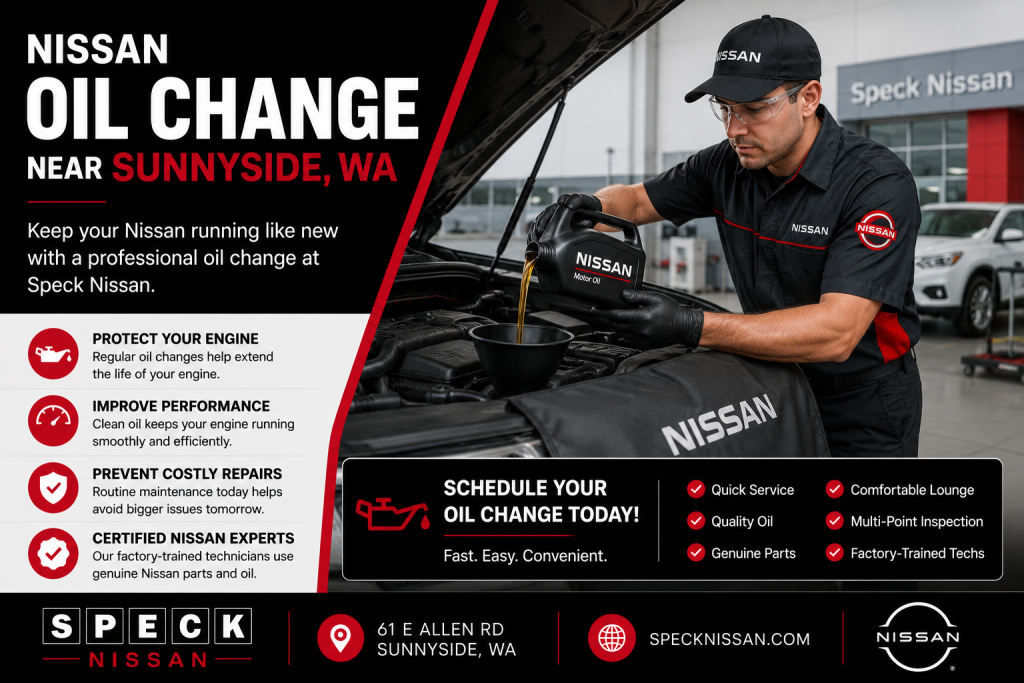
When you bring your Nissan to our Nissan service center, we use only Genuine Nissan OEM (Original Equipment Manufacturer) parts and fluids — including the exact oil type and viscosity recommended by Nissan for your specific vehicle. Generic quick-lube shops use whatever oil is on the shelf. We use what Nissan engineered your engine to run on — protecting your investment and keeping your warranty intact.
Using OEM-approved oil matters more than most drivers realize. The wrong oil viscosity or formula can affect engine performance, fuel economy, and long-term reliability — especially in Eastern Washington’s extreme temperature swings between winter cold and summer heat.
Certified Nissan Technicians
Our service team consists of factory-trained, certified Nissan technicians who know your vehicle inside and out. They’ve been trained specifically on Nissan vehicles — not a generic course covering every brand under the sun. When your Nissan comes into our shop, it’s worked on by someone who knows exactly what it needs.
Same-Day Appointments Available
We know your time is valuable. That’s why we offer same-day appointments at our Nissan service center in Sunnyside — so you don’t have to wait days to get your oil changed. Whether you call ahead or schedule online, our team works hard to get you in and out as quickly as possible without cutting corners on quality.
Can’t make it during the week? Check our current availability online and find a time that works for your schedule — including early morning drop-offs before your commute.
Check Our Nissan Oil Change Coupons
Looking for a cheap oil change near Sunnyside, WA without sacrificing quality? Before you book your next appointment, check our current Nissan oil change coupons on our website. We regularly offer service specials and discounts on oil changes — including conventional, synthetic blend, and full synthetic options — so you can get dealership-quality service at a price that works for your budget.
Our service specials page is updated regularly, so it always pays to check before you come in. A little savings on routine maintenance adds up over time — and you never have to choose between quality and affordability at Speck Nissan.
What’s Included With Your Nissan Oil Change?
When you bring your Nissan in for an oil change at our service center, our technicians do more than just swap the oil. Every Nissan oil change at Speck Nissan includes:
- ✓ Oil and filter replacement with Genuine Nissan OEM-approved fluids
- ✓ Multi-point inspection — a quick check of your vehicle’s key systems while it’s in the shop
- ✓ Tire pressure check — we make sure all four tires are inflated to the correct PSI
- ✓ Fluid level check — coolant, brake fluid, power steering fluid, and windshield washer fluid
- ✓ Visual brake inspection — a quick look at your brake pads and rotors
- ✓ Digital inspection report — a summary of your vehicle’s condition sent directly to your phone or email
It’s not just an oil change — it’s a comprehensive health check for your Nissan every time you come in.
How Often Should You Change Your Nissan’s Oil?
Most modern Nissans with full synthetic oil require an oil change every 5,000 to 7,500 miles — though always check your owner’s manual or the Nissan Intelligent Oil Life Monitor in your vehicle for the most accurate recommendation for your specific model and driving conditions.
Driving in Eastern Washington’s dusty conditions, extreme summer heat, or cold winter temperatures can affect how quickly your oil breaks down. If you do a lot of short trips, towing, or driving in dusty agricultural areas around Sunnyside and Prosser, more frequent changes may be recommended.
How to Schedule Your Nissan Oil Change in Sunnyside
Getting your Nissan oil change near Sunnyside, WA has never been easier. Here’s how to book your appointment:
- Online — Visit our website and click “Schedule Service” to pick your date and time
- By Phone — Call our service department directly to speak with a team member
- In Person — Stop by our Nissan service center in Sunnyside and we’ll get you on the schedule
Same-day appointments are available based on current availability — so don’t hesitate to reach out even if you need service today.
Your Trusted Nissan Service Center in Sunnyside
At Speck Nissan, we believe routine maintenance should be simple, affordable, and done right. As the premier Nissan service center near Sunnyside, WA, we combine certified technicians, OEM parts, same-day availability, and regular Nissan oil change coupons to give you the best possible service experience every time you visit. Don’t settle for a generic quick-lube shop for your Nissan — bring it to the people who know it best.
Check our current service coupons online, schedule your appointment today, and experience the Speck Nissan service difference.
The information provided is for general informational purposes only and does not constitute legal, financial, or professional advice. While we strive to provide accurate and up-to-date information, we make no guarantees regarding the completeness, accuracy, or reliability of the information presented. Any action you take based on the context of this blog is strictly at your own risk. Always consult a qualified professional or specialist for advice specific to your situation. We are not responsible for any losses or damages arising from the use of this blog or its content.
The Best Road Trip Cars from Speck Nissan
Planning a road trip? The right vehicle makes all the difference. Whether you’re heading to the Oregon Coast or crossing the Cascades, you deserve a great ride. Nissan’s lineup is built for the miles — comfortable, fuel-efficient, and tech-loaded. Here are our top picks from Speck Nissan for your next adventure.
Nissan Altima: Best for Couples & Solo Travelers
Midsize Sedan · Up to 39 MPG Highway · Standard AWD available
The Altima is a top road trip choice. Its fuel-efficient design and zero-gravity seats help reduce fatigue on long drives. Standard Nissan Safety Shield 360 comes on every Altima. Higher trims add ProPILOT Assist, making long highway stretches much less tiring. Want efficiency and a smooth ride without the bulk of an SUV? The Altima is hard to beat.
Nissan Rogue: Best All-Around Road Tripper
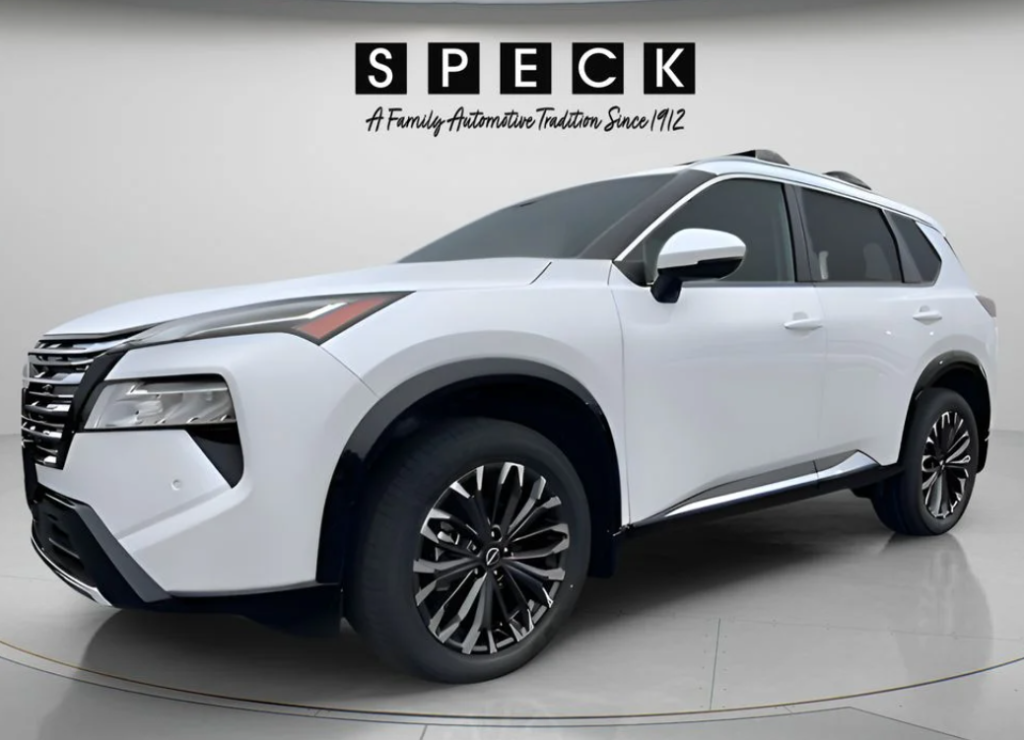
Compact SUV · Up to 33 MPG Highway · AWD available · ProPILOT Assist available
The Rogue comes equipped with ProPILOT Assist, lane-keeping technology, and intelligent cruise control. Together, these features make for a safe and stress-free journey. Impressive fuel efficiency also means fewer stops at the pump. The cabin seats five comfortably, with a roomy cargo area for all your gear. An available 12.3″ panoramic display ties it all together. For most road trippers, the Rogue is the sweet spot.
Nissan Murano: Best for Comfort & Style
Midsize SUV · 260 HP V6 · FWD or AWD · Premium interior
The Murano offers a premium travel experience with its refined interior and smooth ride, making long road trips more enjoyable. The 2025 Murano’s 12.3″ Dual Monolith Display keeps navigation, audio, and everything else right at your fingertips. For couples or small families who want to arrive feeling like they’ve been riding in luxury, the Murano delivers without the luxury price tag.
Nissan Pathfinder: Best for Families
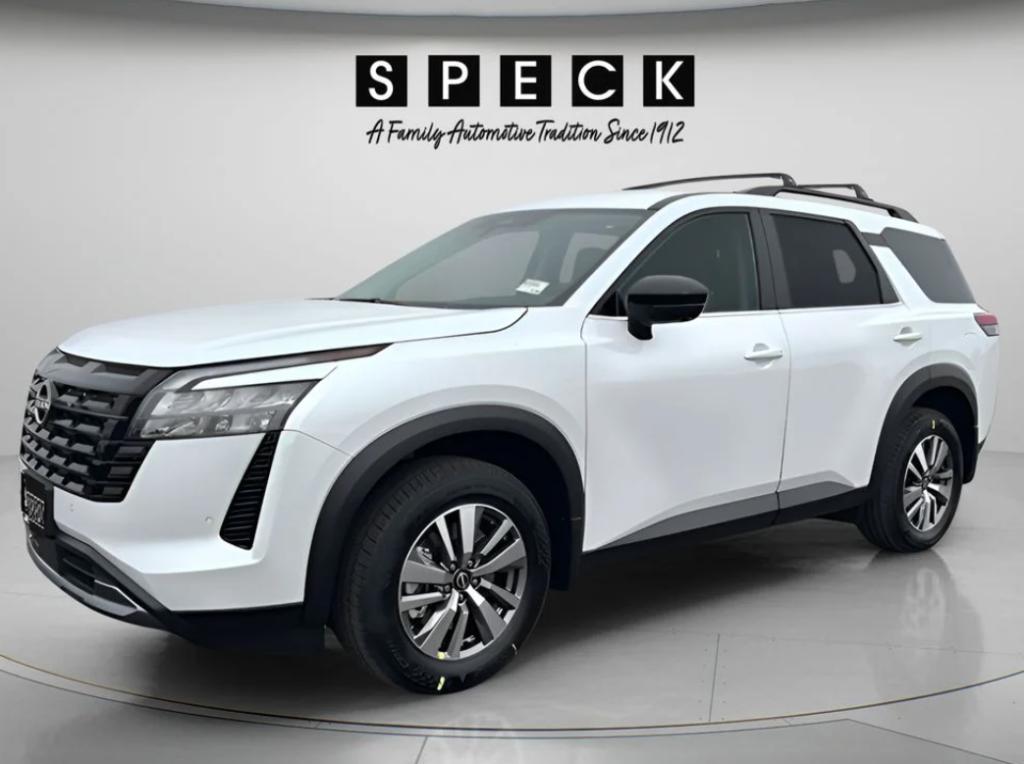
3-Row SUV · 284 HP V6 · Up to 8 passengers · 6,000 lbs towing
The Pathfinder offers seating for up to eight passengers with plenty of cargo space for all your gear, and its intelligent 4×4 system ensures excellent performance on various terrains. The three-row, 8-passenger cabin was crafted to feel like a sanctuary after a long day on the trails, with tons of cargo space and available semi-aniline leather appointments. For bigger families heading somewhere that requires versatility, it’s the clear choice.
Nissan Armada: Best for Big Groups & Towing
Full-Size SUV · 425 HP Twin-Turbo V6 · Up to 8,500 lbs towing · Seats 8
The all-new Armada features a 3.5L twin-turbo V6 engine packing 425 horsepower and 516 lb-ft of torque, with up to 8,500 lbs of towing capacity and seating for up to 8 with enough cargo space for everyone’s gear. If your road trip involves a boat, a trailer, or a full crew of passengers, the Armada is the ultimate all-in-one solution.
Plan your next adventure with Speck Nissan.
Whether you’re drawn to the fuel efficiency of the Altima, the family-friendly space of the Pathfinder, or the raw capability of the Armada, our team in Sunnyside is here to help you find the perfect road trip vehicle. Stop by or browse our current Nissan inventory online — and let’s get you out on the open road.
The information provided is for general informational purposes only and does not constitute legal, financial, or professional advice. While we strive to provide accurate and up-to-date information, we make no guarantees regarding the completeness, accuracy, or reliability of the information presented. Any action you take based on the context of this blog is strictly at your own risk. Always consult a qualified professional or specialist for advice specific to your situation. We are not responsible for any losses or damages arising from the use of this blog or its content.
The 2026 Nissan Rogue is one of the most popular compact SUVs on the market — and for good reason. With a turbocharged engine, standard Nissan Safety Shield 360, up to 32 MPG combined, and a lineup that now spans six trim levels, there’s a Rogue for every driver and every budget. If you’ve been searching for the Nissan Rogue price in the Tri-Cities area, look no further than Sunnyside. Here’s a full breakdown of the 2026 Rogue trim lineup with starting MSRPs, plus what you need to know about Nissan Rogue lease offers near Yakima and finance deals.
2026 Nissan Rogue Trim Levels & Starting MSRP
Rogue S: From $28,790 (FWD) · $30,190 (AWD)
Entry-level · Best value starting point
The most affordable way into a 2026 Rogue. The S comes well-equipped right out of the box with Nissan Safety Shield 360, an 8″ touchscreen with Apple CarPlay and Android Auto, automatic emergency braking with pedestrian detection, blind-spot warning, and rear cross-traffic alert. A strong daily driver for Yakima Valley commuters.
Rogue SV: From $29,790 (FWD) · $31,190 (AWD)
Mid-level · Best all-around value
The SV is the sweet spot in the lineup for most buyers. It adds a dual panel panoramic moonroof, 8-way power driver’s seat, remote start, wireless charging, and a larger 12.3″ touchscreen upgrade (available). With optional packages, the SV can be specced close to the SL for less money.
Rogue Dark Armor New for 2026: Pricing TBD — contact dealer
Style-focused · Bold blacked-out design
The all-new Dark Armor is brand new for 2026 and builds on the SV with an aggressive blacked-out look — gloss black exterior accents, 19″ gloss black wheels, blacked-out grille, mirrors, and badges, plus custom interior trim enhancements. If you want your Rogue to stand out, this is the one.
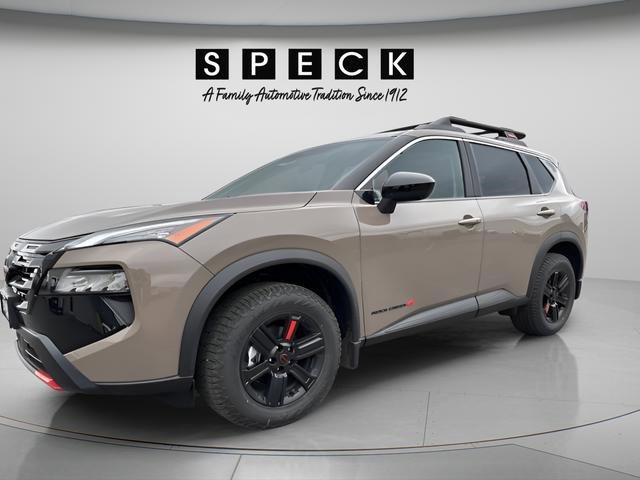
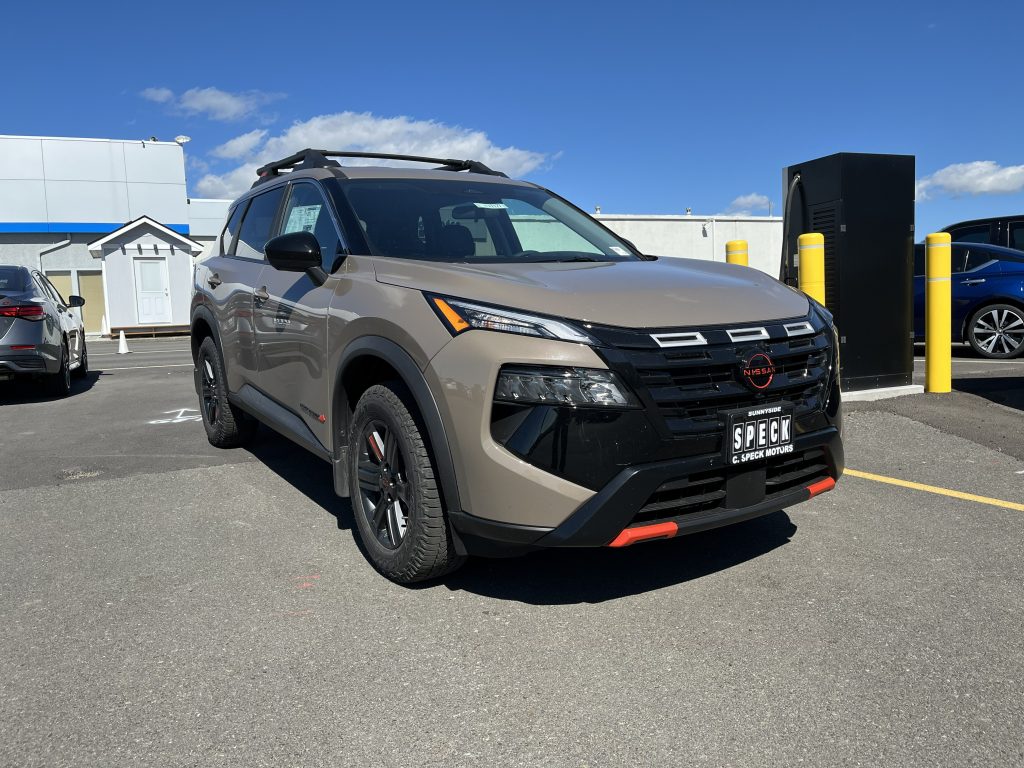
Rogue Rock Creek: From $34,390 (AWD)
Adventure-ready · AWD standard · All-terrain tires
Built for drivers who want to get off the beaten path. The Rock Creek comes exclusively in AWD and adds Falken Wild Peak all-terrain tires on 17″ satin black wheels, a unique front fascia with Lava Red accents, a tubular roof rack with integrated cross bars, and gloss black mirrors. A great fit for Eastern Washington drivers who like to explore.
Rogue SL: From $35,290 (FWD) · $36,690 (AWD)
Premium comfort · ProPILOT Assist included
The SL steps up with leather seating, a 12.3″ touchscreen, a Bose® premium audio system, heated front and rear seats, a 360-degree camera, and ProPILOT Assist — Nissan’s semi-autonomous highway driving technology that helps manage speed and steering. A genuinely premium experience at a competitive price.
Rogue Platinum: From $39,390 (AWD)
Top of the lineup · ProPILOT Assist 2.1
The flagship Rogue brings everything — quilted semi-aniline leather seats, a head-up display, ProPILOT Assist 2.1 (hands-on highway driving), premium ambient interior lighting, and 19″ unique aluminum-alloy wheels. If you want the absolute best-equipped Rogue available, this is it.
*All MSRPs are base pricing and exclude the destination charge, taxes, and fees. AWD pricing is listed where available. Contact us for exact pricing on current inventory.
Nissan Rogue Lease & Finance Deals
The Nissan Rogue is consistently backed by competitive incentives month after month. Looking for a low monthly payment? Nissan Rogue lease offers near Yakima are almost always available. Prefer to own? Nissan Rogue finance deals in Sunnyside feature competitive APR options worth exploring. Lease deals mean lower upfront costs and the flexibility to upgrade every few years. Financing lets you build equity and own the vehicle outright. Either way, there’s almost always a strong Rogue offer available.
Offers change monthly. Nissan lease and finance incentives are updated at the start of each month.The best way to see current Nissan Rogue deals is to check our website or stop by. Our team will walk you through every available offer. We’ll help you find the lowest payment on the trim that’s right for you.
Whether you’re comparing the Nissan Rogue price in the Tri-Cities or looking for the best deal in Yakima County, Sunnyside is worth the drive. Stop by Speck Nissan and let us put you in the right Rogue at the right price.
The information provided is for general informational purposes only and does not constitute legal, financial, or professional advice. While we strive to provide accurate and up-to-date information, we make no guarantees regarding the completeness, accuracy, or reliability of the information presented. Any action you take based on the context of this blog is strictly at your own risk. Always consult a qualified professional or specialist for advice specific to your situation. We are not responsible for any losses or damages arising from the use of this blog or its content.
How to Get a Free Carfax
When shopping for a used vehicle, knowledge is everything. A Carfax report gives you a detailed look at a vehicle’s history before you ever sign on the dotted line. At Speck Nissan, we believe in full transparency, which is why we offer a free Carfax report with every used vehicle we sell. No hidden fees, no runaround, just the information you need to buy with confidence.
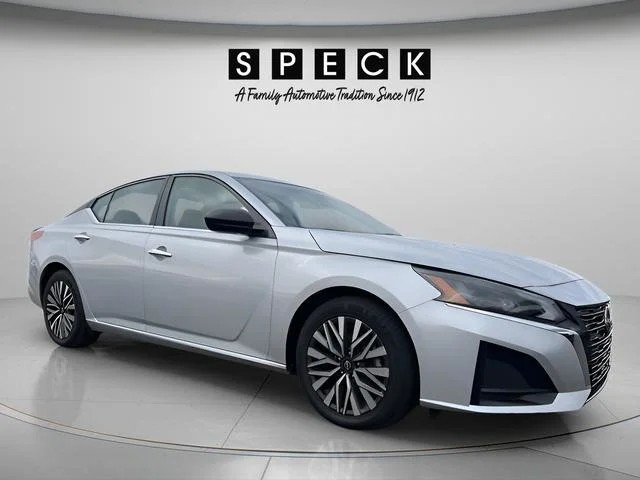
What Is a Carfax Report?
A Carfax report is a detailed vehicle history report that pulls information from thousands of sources across the country. It gives buyers a clear picture of what a used vehicle has been through before it ended up on the lot. For anyone shopping Carfax used cars, it’s one of the most valuable tools available. It takes the guesswork out of used car shopping and helps you avoid vehicles with hidden problems.
What Does a Carfax Report Tell You?
A free Carfax report covers a wide range of important vehicle history information. It shows the number of previous owners and how the vehicle was used, whether as a personal, fleet, or rental car. It also includes accident and damage history, so you know if the vehicle has ever been in a collision. One of the most useful sections is the maintenance history, which shows recorded oil changes, inspections, and other service visits. This gives you a real sense of how well the vehicle was cared for over its lifetime. Additional details include odometer readings, title history, and any reported recalls.
Why Maintenance History Matters
A vehicle that has been consistently serviced is a vehicle you can trust. The maintenance history section of a Carfax report shows whether the previous owner kept up with routine service like oil changes, tire rotations, and inspections. Gaps in service history can be a red flag. A clean, consistent maintenance record is one of the strongest indicators of a well-cared-for vehicle and can give you real peace of mind on your purchase.
Final Thoughts
You should never have to pay for the information you need to make a smart buying decision. At Speck Nissan, every used vehicle listing comes with a free Carfax report so you can review the history before you ever set foot on the lot. Browse our used inventory online and look for the Carfax link on any vehicle page to get started. Our team is here to answer any questions and help you find the right vehicle with complete confidence.
The information provided is for general informational purposes only and does not constitute legal, financial, or professional advice. While we strive to provide accurate and up-to-date information, we make no guarantees regarding the completeness, accuracy, or reliability of the information presented. Any action you take based on the context of this blog is strictly at your own risk. Always consult a qualified professional or specialist for advice specific to your situation. We are not responsible for any losses or damages arising from the use of this blog or its content.
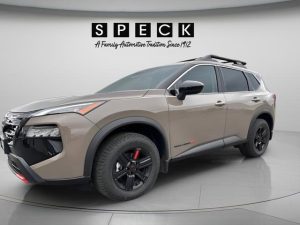
The 2026 Nissan Pathfinder Rock Creek is built for adventure. It combines everyday comfort with serious off-road capability. This trim stands apart from the rest of the Pathfinder lineup. It’s designed for drivers who want more than a standard family SUV.
Performance That Delivers
Under the hood is a 3.5-liter V6 engine. It produces up to 295 horsepower and 270 lb-ft of torque. A 9-speed automatic transmission keeps power smooth and responsive. The Rock Creek also comes standard with 4WD. It offers seven drive and terrain modes, including Mud/Rut, Sand, Snow, and Tow.
Rock Creek-Exclusive Features
The Rock Creek trim brings a bold, trail-ready look. It rides on 18-inch beadlock-style aluminum-alloy wheels. A tubular roof rack adds rugged styling and real utility. All-terrain tires and an off-road-tuned suspension come standard. LED fog lights, hill descent control, and Rock Creek interior trim with red stitching round out the package. A new Rock Creek Premium package adds a panoramic moonroof and wireless phone charging.
Tech and Comfort Inside
Every 2026 Pathfinder now comes with a standard 12.3-inch touchscreen. Wireless Apple CarPlay and Android Auto are also standard across all trims. The Rock Creek seats up to eight passengers across three rows. Latch and Glide second-row seats make third-row access easy. NissanConnect Services and a Wi-Fi hotspot keep the whole family connected on the road.
Final Thoughts
The 2026 Nissan Pathfinder Rock Creek starts at $45,000 MSRP. It is available exclusively with 4WD. If you’re looking for a Nissan Pathfinder Rock Creek for sale, Speck Nissan has you covered. Stop in or contact us today to explore current inventory and available specials.
The information provided is for general informational purposes only and does not constitute legal, financial, or professional advice. While we strive to provide accurate and up-to-date information, we make no guarantees regarding the completeness, accuracy, or reliability of the information presented. Any action you take based on the context of this blog is strictly at your own risk. Always consult a qualified professional or specialist for advice specific to your situation. We are not responsible for any losses or damages arising from the use of this blog or its content.
Spring Events in Sunnyside, Washington
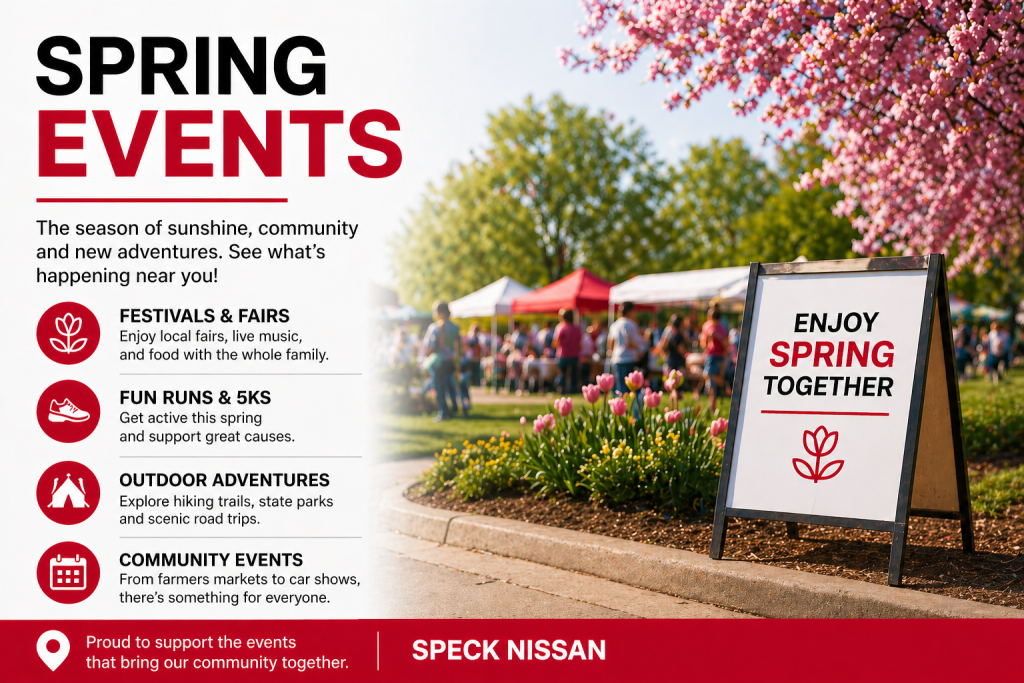
Spring is a great time to get out and enjoy the local community in Sunnyside, Washington. Warmer weather brings a variety of events, activities, and opportunities to explore the area. Whether you are looking for family-friendly fun or local entertainment, there is something happening throughout the season. At Speck Nissan, we love seeing our community come together during this time of year.
Community Events and Festivals
Spring in Sunnyside often includes local festivals, community markets, and outdoor gatherings. These events are a great way to support local businesses and connect with others in the area. Seasonal celebrations and small-town events create a welcoming atmosphere for residents and visitors alike. They are perfect for spending time outdoors and enjoying the fresh air.
Outdoor Activities and Recreation
With the arrival of spring, parks and outdoor spaces become popular destinations. Sunnyside offers opportunities for walking, picnicking, and relaxing in the sunshine. Nearby areas also provide access to hiking trails and scenic views. It is a great time to explore the region and take advantage of the improving weather.
Family-Friendly Fun
Spring events in Sunnyside often include activities for all ages. From community gatherings to outdoor entertainment, there are plenty of options for families. Kids can enjoy open spaces, while adults can take part in local events and activities. It is an ideal season to spend quality time together.
Final Thoughts
Spring in Sunnyside, Washington brings a variety of events and outdoor experiences to enjoy. It is a great time to get involved in the community and explore what the Sunnyside community has to offer.
The information provided is for general informational purposes only and does not constitute legal, financial, or professional advice. While we strive to provide accurate and up-to-date information, we make no guarantees regarding the completeness, accuracy, or reliability of the information presented. Any action you take based on the context of this blog is strictly at your own risk. Always consult a qualified professional or specialist for advice specific to your situation. We are not responsible for any losses or damages arising from the use of this blog or its content.
What is Considered Good Gas Mileage?
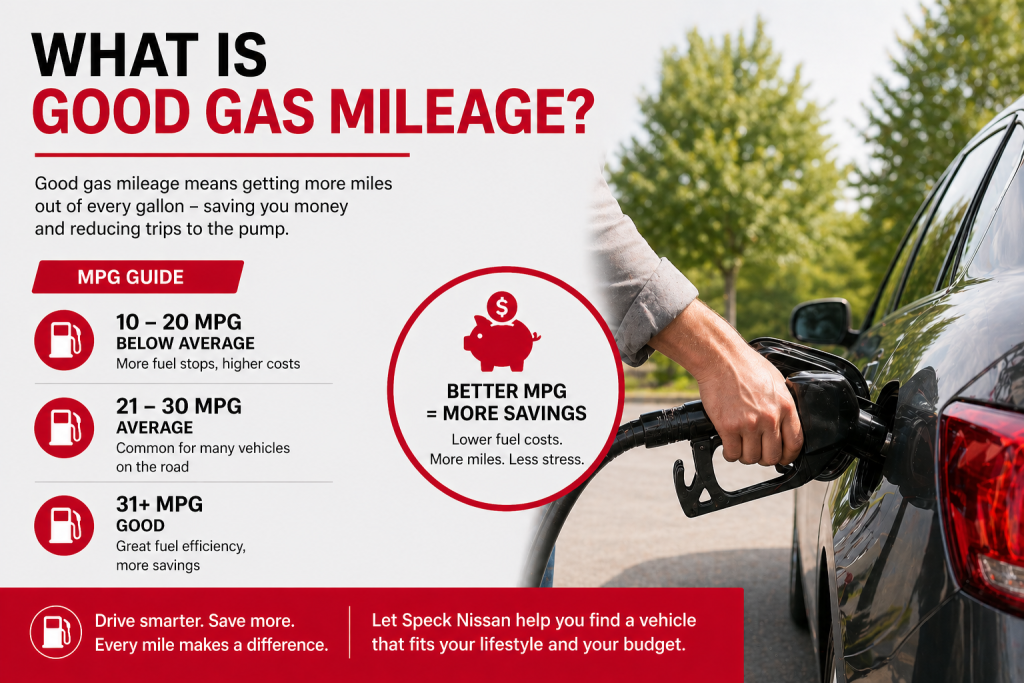
With fuel prices constantly fluctuating, getting good gas mileage has never been more important. But what exactly qualifies as good fuel economy? The answer depends on the type of vehicle you drive and how you use it. At Speck Nissan, we carry a wide range of vehicle that deliver impressive fuel efficiency without sacrificing performance or comfort.
What is Considered Good MPG?
Generally speaking, anything over 30 MPG combined is considered good fuel economy for most drivers. For sedans and compact cars, 35 MPG or higher is excellent. For SUVs and crossovers, hitting 30 MPG or above puts you well ahead of the class average. Trucks and larger vehicle naturally delivered lower numbers, but modern engineering has brought even those figures up significantly in recent years. The EPA rates every new vehicle for city, highway, and combined fuel economy, and those numbers are a great starting point when comparing your options.
City vs. Highway MPG
It is important to understand the difference between city and highway fuel economy. City MPG reflects driving with frequent stops and slower speeds, which generally burns more fuel. Highway MPG reflects steady cruising at higher speeds, which typically where vehicles shine in terms of efficiency. Most drivers experienced a blend of both, which is why the combined rating is often the most useful numbers when shopping for a fuel-efficient vehicle.
Nissan Models That Get Over 30 MPG Highway
Nissan offers several models that exceed 30 MPG on highway, making them smart choices for commuters and long-distance drivers alike. The Nissan Sentra delivers an impressive EPA-estimated 39 MPG on the highway, making it one of the most fuel-efficient sedans in its class. Now, the Nissan Versa is another standout, earning up to 40 MPG on the highway and serving as one of the most affordable and efficient vehicles available today. The Nissan Altima checks in at an estimated 38 MPG highway, offering a great blend of efficiency and midsize sedan comfort. For SUV shoppers, the Nissan Kicks delivers up to 36 MPG on the highway in a practical and stylish compact crossover package. The Nissan Rogue also impresses with an estimated 33 MPG highway, making it a top choice for families who want efficiency without giving up space.
Final Thoughts
Good gas mileage starts at around 30 MPG and gets better from there. Nissan’s lineup is packed with efficient options that deliver real-world savings on every drive. Visit Speck Nissan today to explore our fuel-efficient models and find the one that fits your lifestyle and budget best. Make sure to see if we have any specials available!
The information provided is for general informational purposes only and does not constitute legal, financial, or professional advice. While we strive to provide accurate and up-to-date information, we make no guarantees regarding the completeness, accuracy, or reliability of the information presented. Any action you take based on the context of this blog is strictly at your own risk. Always consult a qualified professional or specialist for advice specific to your situation. We are not responsible for any losses or damages arising from the use of this blog or its content.

