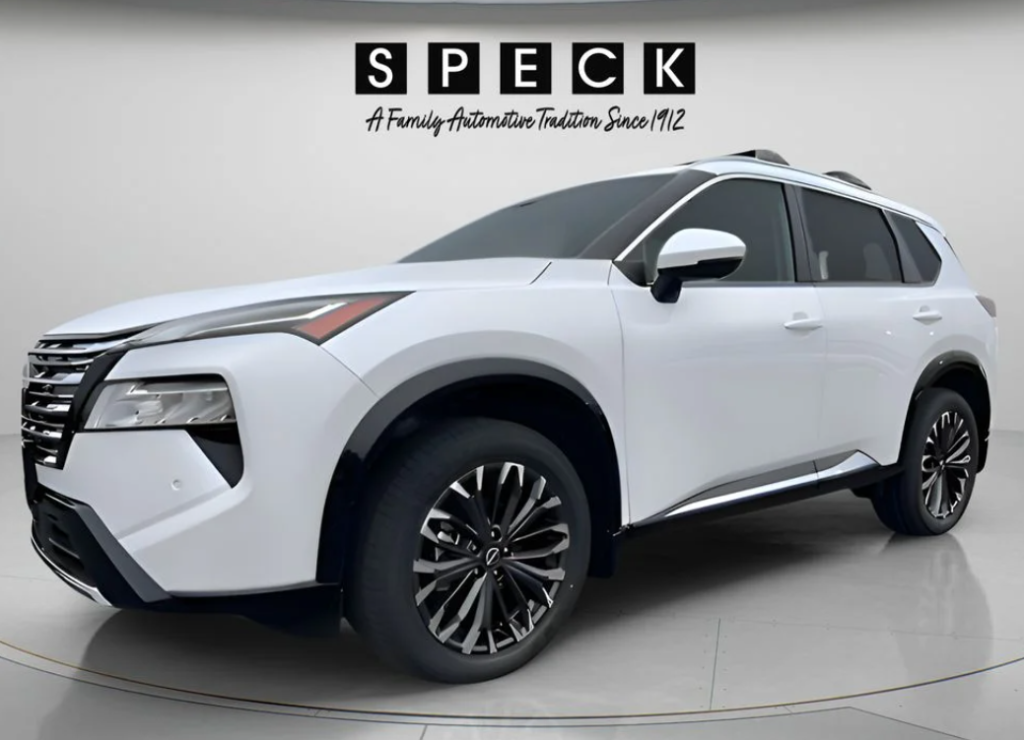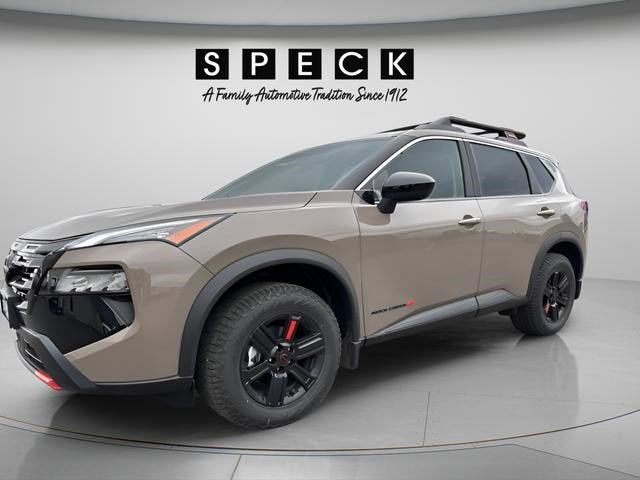
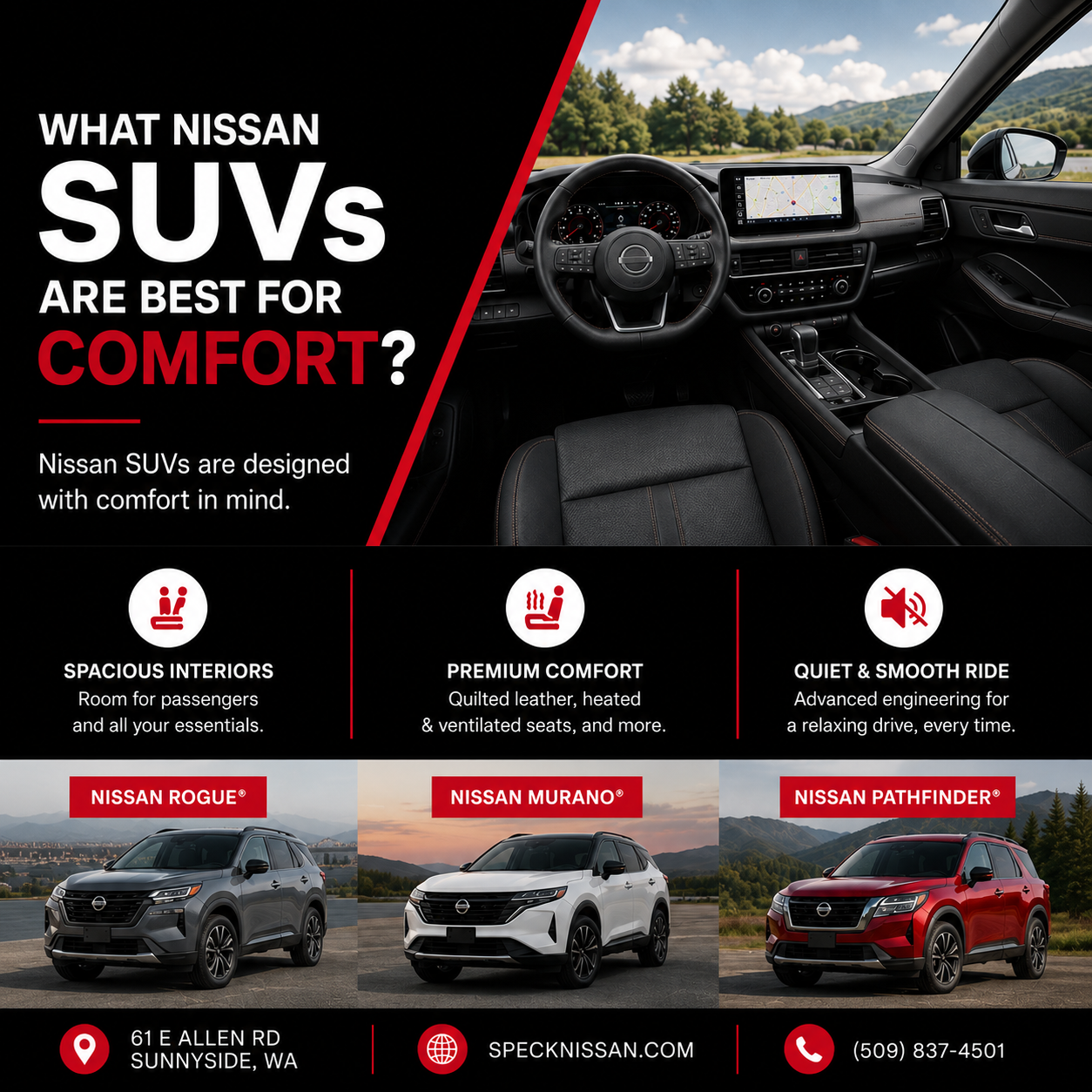
Whether you're commuting across the Yakima Valley, making a long drive over the Cascades, or just running errands around Sunnyside, the comfort of your SUV matters every single day. Nissan's SUV lineup spans from practical compact crossovers to full-size luxury-grade flagships — and each one brings its own approach to comfort. Here's a breakdown of how every Nissan SUV ranks for ride quality, seating, and the features that make long drives feel shorter. Quick Comfort Comparison Model Seating Heated Seats Ventilated Seats Massaging Seats Zero Gravity Seats Murano 5 ✓ Standard Available Available ✓ Standard Armada 7–8 ✓ Standard Available — ✓ Standard Pathfinder 7–8 ✓ Standard — — ✓ Standard Rogue 5 Available — — ✓ Standard Kicks 5 Available — — — Nissan Murano: Most Comfortable Midsize 2-Row · 5 Passengers · Comfort-First Design The Murano is the undisputed comfort champion of the Nissan SUV lineup. Its interior philosophy is based on flair and everyday comfort — the architecture of the seats, dashboard, and driving position all work together to prioritize comfort and simplicity. The redesigned 2025+ Murano brings a breathtaking dual 12.3" display, leather-appointed massaging seats, ambient LED lighting, and a panoramic moonroof. It's the Nissan SUV built for drivers who spend significant time behind the wheel and want every mile to feel refined. Zero Gravity front seats — engineered to reduce fatigue on long drives by mimicking a near-weightless position Available massaging front seats — a true luxury feature that makes long Yakima Valley commutes genuinely relaxing Available ventilated & heated front seats — essential for Eastern Washington's hot summers and cold winters Dual 12.3" Monolith Display — seamlessly integrated screens for infotainment and instrumentation Available Bose® premium audio — concert-quality sound for every drive ProPILOT Assist — lane-centering and adaptive cruise control for relaxed highway driving Panoramic moonroof — available on upper trims, flooding the cabin with natural light Best for: Couples, commuters, and empty nesters who want the most refined, comfort-focused Nissan SUV, without needing three rows. Nissan Armada Best Full-Size Comfort Full-Size 3-Row · Up to 8 Passengers · Flagship Power & Space The Armada is the most spacious SUV in Nissan's lineup — with available leather-appointed seating, optional second-row captain's chairs, three rows of seats, and ample storage for the whole family. The all-new Armada is powered by a 3.5L twin-turbocharged V6 producing 425 HP and 516 lb-ft of torque, so you're never working hard to keep up with traffic — a quiet, effortless cruiser with the power to spare. Standard features include tri-zone automatic climate control, wireless smartphone integration, and seating for up to eight. Zero Gravity seating across all rows — comfort for every passenger on every trip Available ventilated & heated front seats — year-round comfort for Eastern Washington's extreme seasons Tri-zone automatic climate control standard — front, mid, and rear zones keep everyone comfortable Available Bose® 13-speaker premium audio with Acoustic Waveguide Technology 425 HP twin-turbo V6 — effortless power means a smooth, relaxed driving experience at any speed Available captain's chairs in second row — more personal space and easier third-row access Best for: Large families who want full-size space, a powerful and whisper-quiet highway cruiser, and premium comfort across all three rows. Nissan Pathfinder Best Three-Row Family Comfort Midsize 3-Row · Up to 8 Passengers · Family Sanctuary The Pathfinder's 3-row, 8-passenger seating was crafted to feel like a sanctuary after a long day — with tons of cargo space and available semi-aniline leather appointments. The optional tri-zone climate control ensures all passengers can be comfortable no matter where they sit, making it ideal for longer family road trips across the Yakima Valley and beyond. Its 284 HP V6 provides smooth, composed highway performance. Zero Gravity front seats standard — engineered to reduce long-drive fatigue Heated front seats standard on most trims Available semi-aniline leather seating — soft, premium material across all three rows EZ FLEX® 2nd-row seating system — easy third-row access without removing car seats Available tri-zone automatic climate control Available Bose® premium audio with 13 speakers ProPILOT Assist for relaxed highway driving on I-82 and SR-240 Best for: Active families who need genuine three-row comfort for school runs, road trips, and everything in between — without stepping into a full-size SUV. Nissan Rogue Best Compact Comfort Compact 2-Row · 5 Passengers · Smart & Refined The Rogue may be Nissan's most practical compact SUV, but it brings genuine comfort credentials. Two Bose UltraNearfield™ speakers are built into the headrests and can be adjusted to fit any mood, creating a personal audio experience rarely found at this price point. Zero Gravity seats come standard, and available ProPILOT Assist 2.1 — Nissan's most advanced hands-free highway tech — makes long commutes to Hanford or across the Tri-Cities genuinely relaxing. Zero Gravity front seats standard — fatigue-reducing design on every trim Available heated front seats Bose® UltraNearfield™ headrest speakers — available personal audio built into the front seats ProPILOT Assist 2.1 available — the most advanced hands-free highway driving system Nissan offers 12.3" panoramic display available — large, clear touchscreen for easy navigation and infotainment Motion-activated liftgate — hands-free convenience when loading groceries or gear Best for: Commuters and smaller families who want a comfortable, well-equipped compact SUV with genuinely premium features at an accessible price point. Nissan Kicks Best Entry-Level Comfort Compact 2-Row · 5 Passengers · Efficient & Surprisingly Comfortable The Kicks is Nissan's most affordable SUV — and it's more comfortable than its price suggests. The 2025 Kicks received 1.7 extra inches of shoulder room up front, 1.5 additional inches in the rear, and an extra 0.9 inch of rear seat knee room — meaningful upgrades that make the cabin feel noticeably less cramped. Available heated front seats, wireless CarPlay, and Nissan Safety Shield 360 are included at an entry-level price point. Significantly increased shoulder and knee room for 2025+ — a meaningfully more comfortable cabin than before Available heated front seats Wireless Apple CarPlay & Android Auto standard Nissan Safety Shield 360 standard — full suite of driver-assist safety features on every trim Available Intelligent AWD for confident driving in Eastern Washington winters Best for: First-time buyers, solo commuters, and budget-conscious drivers who want a comfortable, modern compact SUV without a premium price tag. Come feel the difference in person. The best way to find your most comfortable Nissan SUV is to sit in each one. Stop by your local Nissan dealer at Speck Nissan in Sunnyside — we'll walk you through the lineup, let you compare the Zero Gravity seats to the Murano's massaging seats, and help you find the right fit for your daily drive. Shop Nissan SUVs The information provided is for general informational purposes only and does not constitute legal, financial, or professional advice. While we strive to provide accurate and up-to-date information, we make no guarantees regarding the completeness, accuracy, or reliability of the information presented. Any action you take based on the context of this blog is strictly at your own risk. Always consult a qualified professional or specialist for advice specific to your situation. We are not responsible for any losses or damages arising from the use of this blog or its content.
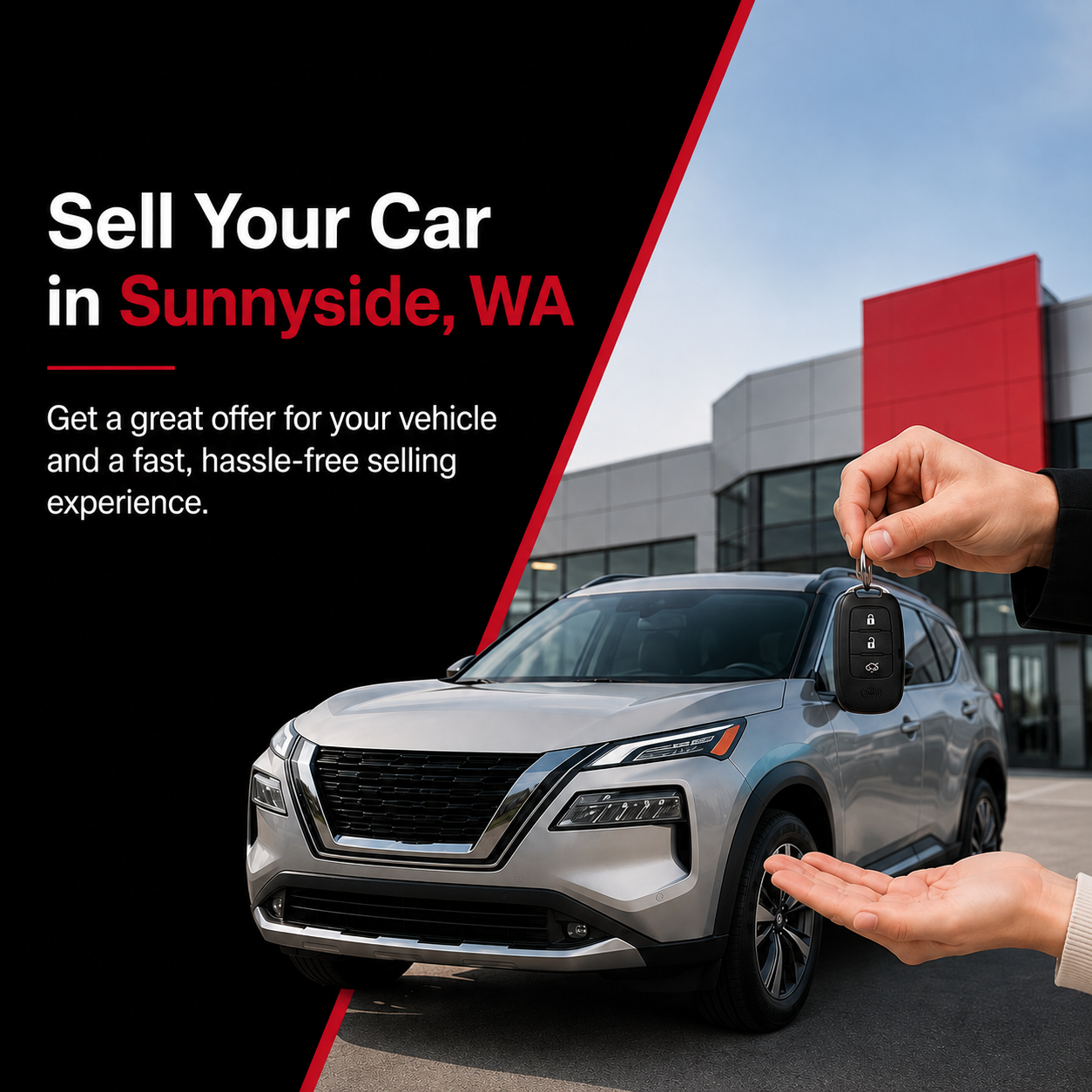
Sell My Car in Sunnyside, WA — Get a Cash Offer at Speck Nissan
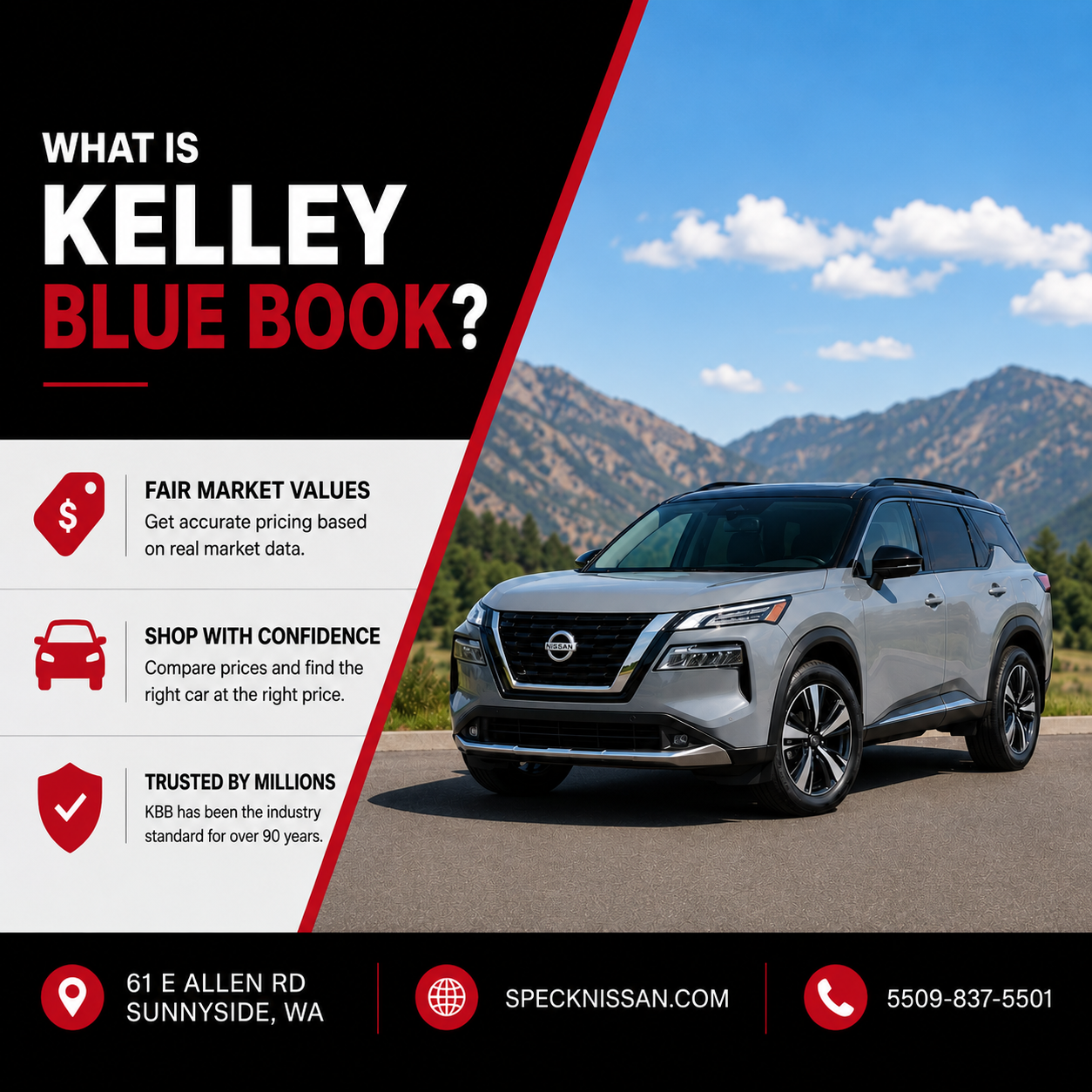
If you've been searching "sell my car in Sunnyside, WA", then you're in the right place. At Speck Motors, we buy cars directly from the public, no purchase necessary. You don't have to buy a vehicle from us to sell us yours. Whether you're downsizing, upgrading elsewhere, or simply ready to turn your vehicle into cash, we make the process simple, transparent, and stress-free. Here's how it works. We Buy Cars — No Purchase Necessary One of the biggest misconceptions about selling to a dealership is that you have to buy something in return. That's not the case here. We buy cars straight off the street, from private owners, from people upgrading at another dealership, from anyone who has a vehicle and wants a fair cash offer. If you're wondering who buys used cars in the Sunnyside area, the answer is simple — we do, and we'd love to take a look at yours. As one of the most established Sunnyside, WA dealerships, we're actively looking for quality used vehicles to add to our inventory. That means we're motivated to make you a competitive offer, not a lowball number designed to discourage you. Step One: Start With a Kelley Blue Book Estimate Before you come in, the best place to start is Kelley Blue Book (KBB). Getting a free KBB trade-in estimate at kbb.com gives you a realistic baseline for what your vehicle is worth in today's market. It takes just a few minutes and puts you in a much stronger position when it's time to talk numbers. Here's what you'll need to get your KBB estimate: Your vehicle's year, make, model, and trim level Current mileage An honest condition rating — Excellent, Very Good, Good, or Fair Your zip code so KBB can factor in regional market demand Any options or packages your vehicle has, such as AWD, leather, sunroof, towing equipment Keep in mind that KBB provides a range, not a single fixed number. Where your vehicle falls within that range depends on condition, mileage, market demand, and local pricing trends. Your KBB estimate is your starting point, not the final word. Step Tow: Visit Us for a Free In-Person Appraisal Once you have your KBB estimate in hand, bring your vehicle to Speck Motors in Sunnyside for a free, no-pressure in-person appraisal. Our team will take a look at your vehicle and make you a real cash offer, no guesswork, no games, no obligation to buy anything from us. Here's what we look at during the appraisal: Exterior Condition — Paint, body panels, dents, scratches, and rust Interior Condition — Seats, carpet, headliner, trim, and overall cleanliness Mechanical Condition — Engine, transmission, suspension, and any warning lights Tires & Brakes — Remaining tread depth and brake wear Mileage — Lower mileage generally means a higher offer Vehicle History — Accident history, number of previous owners, and service records Market Demand — How quickly vehicles like yours are moving in the local market Being upfront about any known issues ahead of time keeps the process smooth and helps us get to a number faster. Step Three: Get Your Cash Offer After the appraisal, we'll present you with a straightforward cash offer for your vehicle. If you love the number, we can wrap things up quickly and get you paid. If you decide to put it toward a vehicle on our lot instead, we'll apply the full value of your trade toward your purchase — and if you're in Washington State, your trade-in also reduces the taxable purchase price of your next vehicle, saving you even more at the time of sale. Either way, there's zero pressure. Our goal is to give you a fair offer and let you decide what works best for you. What to Bring When You Come In To make the appraisal process as smooth as possible, bring the following: Vehicle Title: Proof of ownership Current Registration: Confirms the vehicle is properly registered in Washington State Valid Government-Issued ID: Driver's license or state ID for all titled owners Loan Payoff Information: If you still owe on the vehicle, bring your lender name, account number, and current payoff amount All Keys and Remote s: Having all keys can positively impact your offer Why Sell Your Car at a Sunnyside, WA Dealership? Selling privately might seem appealing — but it comes with real challenges. Listings, photos, strangers, test drives, lowball offers, and waiting. Selling to us is faster, safer, and far less stressful. Here's why Sunnyside, WA dealerships like ours are the smarter choice: Fast & Simple: No listings, no waiting, no back-and-forth with strangers Safe Transaction: No cash handling with unknown buyers or risk of fraud Transparent Process: You'll understand every step before you agree to anything No Obligation: Don't like the offer? Walk away — no pressure, no hard feelings Trade-In Tax Credit: If you buy here too, Washington's trade-in tax credit can save you hundreds on your next purchase Ready to Sell? Come See Us. If you're ready to sell your car in Sunnyside, WA, stop by Speck Motors for a free appraisal and a real cash offer. Start with your KBB estimate at kbb.com, then bring your vehicle in and let our team take it from there. We make it easy, because selling your car should be. Get a Trade-in The information provided is for general informational purposes only and does not constitute legal, financial, or professional advice. While we strive to provide accurate and up-to-date information, we make no guarantees regarding the completeness, accuracy, or reliability of the information presented. Any action you take based on the context of this blog is strictly at your own risk. Always consult a qualified professional or specialist for advice specific to your situation. We are not responsible for any losses or damages arising from the use of this blog or its content.