
Blog / Automotive Service and Parts

Blog

All Automotive Service and Parts Automotive Tips Nissan Sales Automotive Financing Dealership Blog Community Events Sunnyside Used Cars, Trucks, and SUVs
oil change service sunnyside, wa

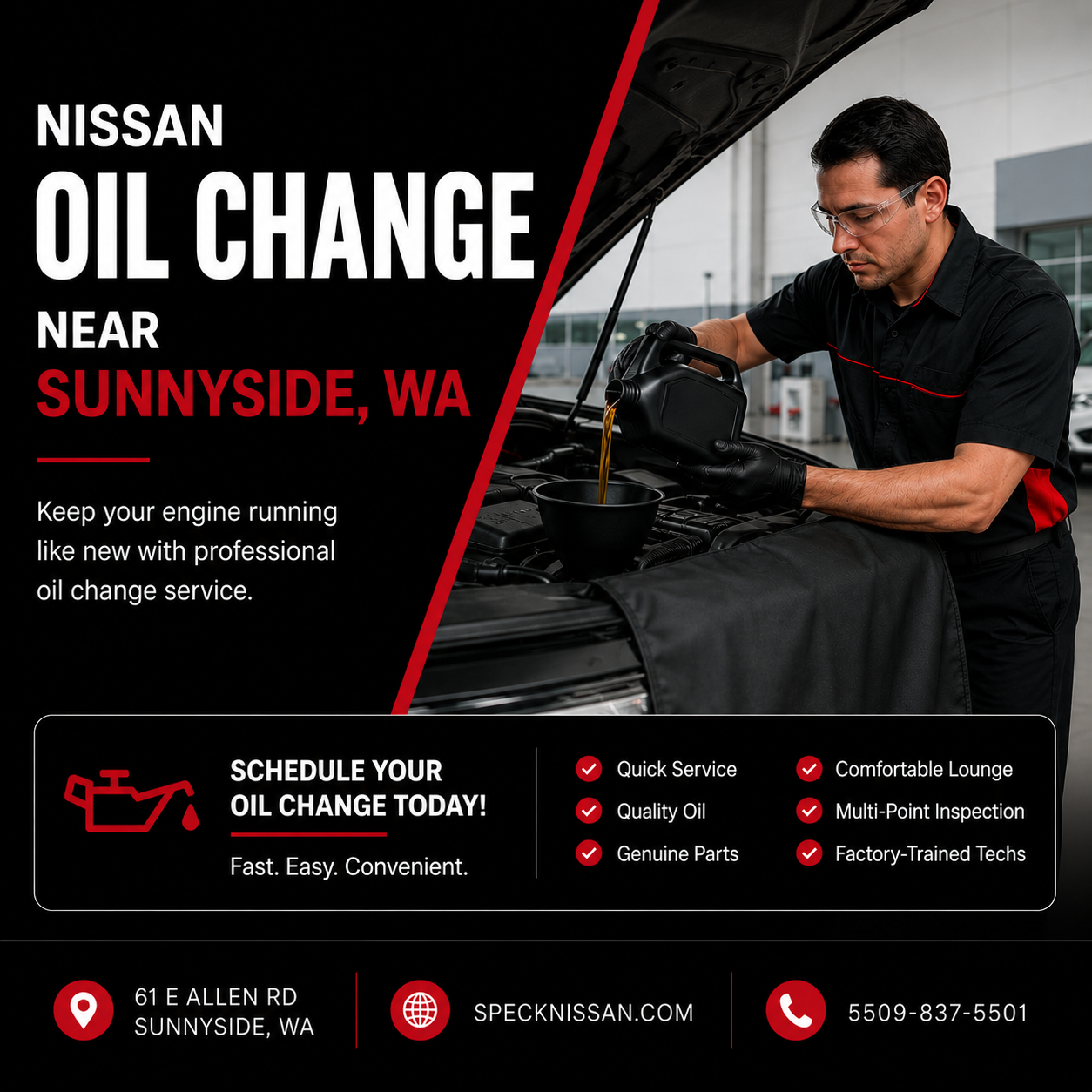
Nissan Oil Change Near Sunnyside, WA | Speck Nissan Service Center

When it comes to keeping your Nissan running at its best, no service is more important — or more routine — than a regular oil change. At Speck Nissan in Sunnyside, we're proud to be the premier Nissan service center for drivers across the Yakima Valley and Tri-Cities area. Whether you're due for your next Nissan oil change or just moved to the area and need a trusted service partner, we're here to make the process fast, easy, and affordable. Why Get Your Nissan Oil Change at a Nissan Dealership? Not all oil changes are created equal — and when it comes to your Nissan, where you get your service done matters. Here's why Speck Nissan is the right choice for your next Nissan oil change near Sunnyside, WA: OEM Parts & Fluids — Every Time When you bring your Nissan to our Nissan service center, we use only Genuine Nissan OEM (Original Equipment Manufacturer) parts and fluids — including the exact oil type and viscosity recommended by Nissan for your specific vehicle. Generic quick-lube shops use whatever oil is on the shelf. We use what Nissan engineered your engine to run on — protecting your investment and keeping your warranty intact. Using OEM-approved oil matters more than most drivers realize. The wrong oil viscosity or formula can affect engine performance, fuel economy, and long-term reliability — especially in Eastern Washington's extreme temperature swings between winter cold and summer heat. Certified Nissan Technicians Our service team consists of factory-trained, certified Nissan technicians who know your vehicle inside and out. They've been trained specifically on Nissan vehicles — not a generic course covering every brand under the sun. When your Nissan comes into our shop, it's worked on by someone who knows exactly what it needs. Same-Day Appointments Available We know your time is valuable. That's why we offer same-day appointments at our Nissan service center in Sunnyside — so you don't have to wait days to get your oil changed. Whether you call ahead or schedule online, our team works hard to get you in and out as quickly as possible without cutting corners on quality. Can't make it during the week? Check our current availability online and find a time that works for your schedule — including early morning drop-offs before your commute. Check Our Nissan Oil Change Coupons Looking for a cheap oil change near Sunnyside, WA without sacrificing quality? Before you book your next appointment, check our current Nissan oil change coupons on our website. We regularly offer service specials and discounts on oil changes — including conventional, synthetic blend, and full synthetic options — so you can get dealership-quality service at a price that works for your budget. Our service specials page is updated regularly, so it always pays to check before you come in. A little savings on routine maintenance adds up over time — and you never have to choose between quality and affordability at Speck Nissan. What's Included With Your Nissan Oil Change? When you bring your Nissan in for an oil change at our service center, our technicians do more than just swap the oil. Every Nissan oil change at Speck Nissan includes: ✓ Oil and filter replacement with Genuine Nissan OEM-approved fluids ✓ Multi-point inspection — a quick check of your vehicle's key systems while it's in the shop ✓ Tire pressure check — we make sure all four tires are inflated to the correct PSI ✓ Fluid level check — coolant, brake fluid, power steering fluid, and windshield washer fluid ✓ Visual brake inspection — a quick look at your brake pads and rotors ✓ Digital inspection report — a summary of your vehicle's condition sent directly to your phone or email It's not just an oil change — it's a comprehensive health check for your Nissan every time you come in. How Often Should You Change Your Nissan's Oil? Most modern Nissans with full synthetic oil require an oil change every 5,000 to 7,500 miles — though always check your owner's manual or the Nissan Intelligent Oil Life Monitor in your vehicle for the most accurate recommendation for your specific model and driving conditions. Driving in Eastern Washington's dusty conditions, extreme summer heat, or cold winter temperatures can affect how quickly your oil breaks down. If you do a lot of short trips, towing, or driving in dusty agricultural areas around Sunnyside and Prosser, more frequent changes may be recommended. How to Schedule Your Nissan Oil Change in Sunnyside Getting your Nissan oil change near Sunnyside, WA has never been easier. Here's how to book your appointment: Online — Visit our website and click "Schedule Service" to pick your date and time By Phone — Call our service department directly to speak with a team member In Person — Stop by our Nissan service center in Sunnyside and we'll get you on the schedule Same-day appointments are available based on current availability — so don't hesitate to reach out even if you need service today. Your Trusted Nissan Service Center in Sunnyside At Speck Nissan, we believe routine maintenance should be simple, affordable, and done right. As the premier Nissan service center near Sunnyside, WA, we combine certified technicians, OEM parts, same-day availability, and regular Nissan oil change coupons to give you the best possible service experience every time you visit. Don't settle for a generic quick-lube shop for your Nissan — bring it to the people who know it best. Check our current service coupons online, schedule your appointment today, and experience the Speck Nissan service difference. Nissan Coupons The information provided is for general informational purposes only and does not constitute legal, financial, or professional advice. While we strive to provide accurate and up-to-date information, we make no guarantees regarding the completeness, accuracy, or reliability of the information presented. Any action you take based on the context of this blog is strictly at your own risk. Always consult a qualified professional or specialist for advice specific to your situation. We are not responsible for any losses or damages arising from the use of this blog or its content.
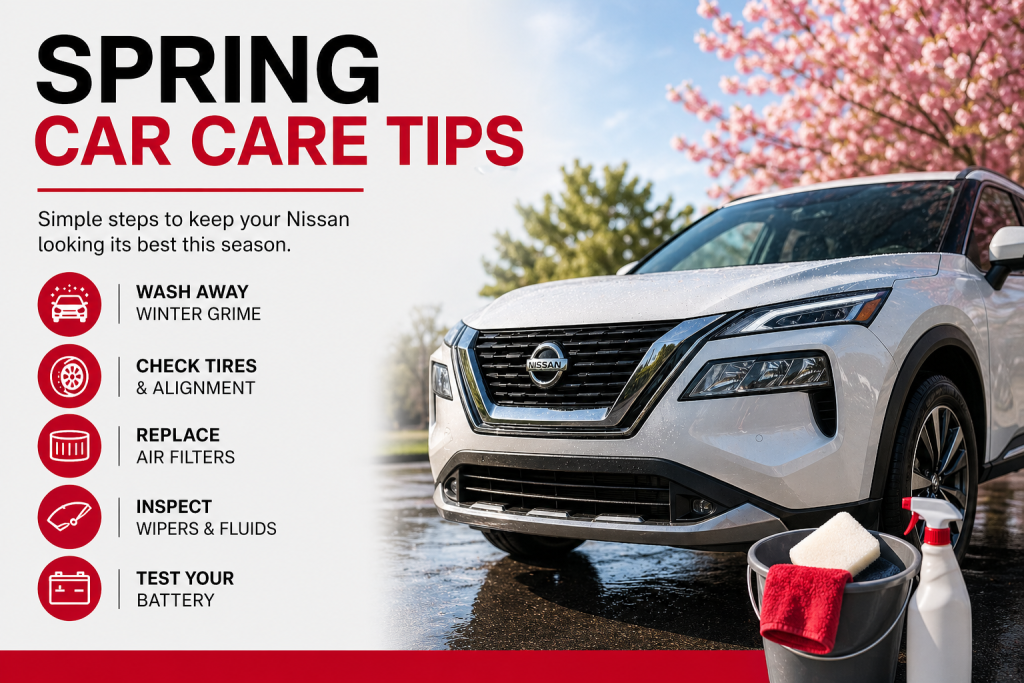
Spring Car Care Tips

As the seasons change and warmer weather arrives, it is the perfect time to give your vehicle some attention. Winter can be tough on your car, and spring is a great opportunity to make sure everything is in top shape. At Speck Nissan, our service team is here to help you get your vehicle ready for the road ahead. Tires and Brakes Cold weather and rough winter roads can take a serious toll on both your tires and brakes. Check your tire pressure, inspect tread depth, and look for any cracks or or uneven wear that may have developed over the colder months. If you notice any squeaking, grinding, or a longer stopping distance, have your brakes inspected right away. Catching these issues early is one of the most important things you can do got your safety on the road. Oil, Fluids, and Exterior Spring is the perfect reminder to check all of your vehicle's fluids. Including engine oil, coolant, brake fluid, and windshield washer fluid. If you are due for an oil change, do not put it off any longer. It is also a great time to give your car a thorough wash including the underneath. Salt and road grime from winter can cause rust and corrosion if left untreated. Final Thoughts Taking care of your vehicle in the spring sets you up for a safe and reliable driving season. These simple steps can save you from costly repairs down the road. Schedule your spring service appointment with the team at Speck Nissan today and let us help keep your vehicle in peak condition. Schedule Service The information provided is for general informational purposes only and does not constitute legal, financial, or professional advice. While we strive to provide accurate and up-to-date information, we make no guarantees regarding the completeness, accuracy, or reliability of the information presented. Any action you take based on the context of this blog is strictly at your own risk. Always consult a qualified professional or specialist for advice specific to your situation. We are not responsible for any losses or damages arising from the use of this blog or its content.

Infotainment graphic showing who pays for safety recalls

Who Pays for Safety Recalls

When a vehicle has a safety recall, many owners worry about the costs involved. Fortunately, automakers and government regulations ensure that necessary repairs are taken care of without financial burden on the vehicle owners. Here's what you need to know about who pays for safety recalls and what steps to take if our vehicle is affected. 1. What Is a Safety Recall? A safety recall is issued when a vehicle manufacturer or the National Highway Traffic Safety Administration (NHTSA) identifies a defect that could impact safety. These defects may involve mechanical issues, faulty components, or software problems that increase the risk of accidents. 2. Who Covers the Cost of Repairs? The cost of recall-related repairs is covered entirely by the vehicle manufacturer. Whether the recall is issued voluntarily by the automaker or mandated by the NHTSA the manufacturer is legally required to fix the issue at no cost to the owner. 3. How Do You Know If Your Car Has a Recall? You can check for recalls by: Looking up your Vehicle Identification Number (VIN) on the NHTSA website. Checking the manufacturer's website for recall notices. Paying attention to recall notices sent via mail or email by the manufacturer. 4. Where Can You Get Recall Repairs Done? Authorized dealership service centers handle all recall-related repairs. Unlike independent repair shops, dealerships have direct access to manufacturer-approved parts and procedures for fixing the recalled issue. 5. What If You've Already Paid for the Repair? If you previously paid for a repair that later became part of a recall, you may be eligible for reimbursement. Contact the vehicle manufacturer and provide receipts or repair records to claim a refund. 6. Do Recalls Expire? Most recalls do not have an expiration date, but it's always best to address them as soon as possible. Ignoring a recall could compromise safety and impact the resale value of your vehicle. Final Thoughts Safety recalls ensure that manufacturers correct defects that could put drivers and passengers at risk. If your vehicle has a recall, schedule a repair appointment at Speck Nissan as soon as possible. The repairs won't cost you anything, and they help keep your car safe on the road.

Mechanic checking tire tread depth with penny, highlighting tire maintenance importance for vehicle safety

How Often Do You Need New Tires

Tires are one of the most critical components of your vehicle, affecting safety, performance, and fuel efficiency. Knowing when to replace them is essential to maintaining a smooth and secure ride. Signs That You Need New Tires Over time, tires wear down, reducing their effectiveness. Here are some key indicators that it's time for a replacement: Tread Wear: The tread depth should be at least 2/32 of an inch. Use the penny test: if Lincoln's head is Visible, it's time for new tires. Cracks or Bulges: Visible cracks or bulges on the sidewall indicate structural damage and potential blowout risks. Frequent Loss of Air Pressure: If your tires lose air quickly, they may have slow leaks or weakened rubber. Vibration While Driving: Excessive vibration can indicate uneven tire wear or internal damage. Poor Traction in Wet Conditions: If your vehicle struggles in rain or snow, worn tread might be the culprit. Factors That Affect Tire Longevity Several factors influence how long your tires will last, including: Driving Habits: Aggressive driving, hard braking, and sharp turns wear out tires faster. Road Conditions: Rough roads, potholes, and debris can accelerate tire damage. Tire Type and Quality: High-performance or soft rubber compound tires may wear out faster than all-season or touring tires. Proper Maintenance: Regular rotation, proper inflation, and alignment checks extend tire lifespan. Recommended Tire Replacement Timeline While tire longevity varies, most manufacturers recommend replacing tires every six years, regardless of tread wear, and no later than ten years from the manufacturing date. However, if you drive frequently or in extreme conditions, you may need new tires sooner. How to Extend Tire Life To maximize tire lifespan and performance, follow these tips: Check Tire Pressure Regularly: Underinflated or overinflated tires wear unevenly. Rotate Tires Every 5,000-7,500 Miles: This ensures even wear across all tires. Maintain Proper Alignment: Misaligned wheels cause premature tire wear. Inspect Tires Often: Look for damage, uneven wear, or embedded objects. Conclusion Knowing when to replace your tires is crucial for safety and performance. Regular inspections and maintenance can help extend their lifespan, but when you notice signs of significant wear or damage, it's best to replace them promptly. Keeping your tires in good condition ensures a smoother, safer, and more efficient driving experience.

Nissan traction control light dashboard warning icon indicating possible malfunction, slippery road, or ABS issue

What is the "Traction Control Light" and What Does It Mean?

Your vehicle's Traction Control Light (TLC) is an important indicator that helps maintain stability and control in various driving conditions. If this light comes on, it could signify a range of issues, from normal operation to potential system malfunctions. Understanding what it means and how to respond can help ensure your safety on the road. What is the Traction Control System (TCS)? The Traction Control System (TCS) is designed to prevent wheel slippage and improve grip on slippery or uneven roads. It works by automatically adjusting engine power or applying brakes to specific wheels when it detects a loss of traction. This feature is especially useful in adverse weather conditions, such as rain, snow, or ice. Why Does the Traction Control Light Turn On? There are several reasons why the TCL may illuminate on your dashboard: Slippery Road Conditions: If you're driving on wet or icy roads, the light may blink as the system actively prevents wheel slippage. Manual Deactivation: Some vehicles allow you to manually turn off the traction control system. If you've done this, the light will remain on until reactivated. Faulty Wheel Speed Sensors: The TCS relies on wheel speed sensors to function properly. If one of these sensors is malfunctioning, the system may not work correctly. Anti-Lock Braking System (ABS) Issues: Since the TCS and ABS share components, a problem with the ABS could also trigger the TCL. Electronic Control System Malfunction: In some cases, an issue with the vehicle's computer or electrical system may cause the light to stay on. What Should You Do If the Traction Control Light Comes On? Your response depends on whether the light is blinking or solid: Flashing Light: This indicates the system is actively working to prevent wheel slippage. Drive cautiously and adjust your speed to road conditions. Solid Light: If the TCL remains solid, it may indicate a malfunction. Try restarting your vehicle, if the light persists, consider having it inspected by a professional. Can You Drive With the Traction Control Light On? While it's possible to drive with the TCL illuminated, it's best to have the issue diagnosed as soon as possible. If the system isn't functioning correctly, your vehicle may be more prone to skidding in poor conditions, reducing overall safety. When to Seek Professional help If the Traction Control Light stays on continuously, it's advisable to schedule an inspection with certified mechanic. They can check for sensor issues, ABS malfunctions, or electrical problems that may be affecting the system. Conclusion The Traction Control Light plays a vital role in maintaining vehicle stability and safety. While occasional activation is normal during slippery conditions, a persistent or solid light may indicate an underlying problem. Understanding its function and knowing when to seek help ensures you remain safe on the road, no matter the driving conditions.

A person with a broken down car on the side of the road opening up their hood.

Automotive Service Mistakes People Make

Regular vehicle maintenance is essential for keeping your car in optimal condition, ensuring safety, and avoiding costly repairs. However, many drivers unknowingly make mistakes when servicing their vehicles, leading to long-term issues. Here are some of the most common automotive service mistakes and how to avoid them. Skipping Regular Oil Changes Oil changes are critical to keeping your engine running smoothly. Delaying or skipping oil changes can lead to increased engine wear, overheating, and even engine failure. Always follow the manufacturer's recommended schedule and use the correct type of oil for your vehicle. Ignoring Warning Lights Dashboard warning lights indicate potential problems, but many drivers ignore them until an issue worsens. Whether it's the check engine light, tire pressure monitoring system (TPMS) light, or brake warning light, addressing the problem early can prevent costly repairs and enhance safety. Using Incorrect Fluids Fluids play a crucial role in a vehicle's performance, from engine oil to coolant and transmission fluid. Using the wrong type or neglecting fluid changes can lead to engine damage, transmission failure, and overheating. Always check your owner's manual for the correct fluid specifications. Neglecting Tire Maintenance Tires need regular care to maintain proper performance and safety. Common mistakes include: Driving on underinflated or overinflated tires, which can cause uneven wear and reduce fuel efficiency. Ignoring tire rotations, leading to premature wear. Failing to check alignment, which can affect handling and tire longevity. Overlooking Brake Inspections Brakes are one of the most important safety components in any vehicle. Neglecting brake maintenance can lead to reduced stopping power and increased risk of accidents. Listen for squeaking or grinding noises and have your brakes inspected regularly. Delaying Battery Replacements A failing battery can leave you stranded unexpectedly. If you notice slow engine cranking, dim lights, or electronic malfunctions, it may be time for a replacement. Checking battery terminals for corrosion and ensuring a secure connection can also prolong battery life. Not Replacing Air Filters Air filters keep dirt and debris from entering your engine and cabin. A clogged engine air filter can reduce performance and fuel efficiency, while a dirty cabin filter can affect air quality. Replace them as recommended by your vehicle's manufacturer. Failing to Follow the Maintenance Schedule Every vehicle has a maintenance schedule designed to keep it running efficiently. Skipping recommended services such as transmission flushes, timing belt replacements, and coolant flushes can lead to major mechanical failures. Following your car's service manual is the best way to ensure longevity and reliability. Conclusion Avoiding these common automotive service mistakes can save you money, improve your vehicle's performance, and enhance safety. Regular maintenance and paying attention to your car's needs will help keep it in top shape for years to come. If you're ever unsure about a service, consulting with a professional mechanic is always a good idea.

How to Check the Oil in Your New Altima

How to Check the Oil in Your New Altima Make sure your engine is cooled down, between 15-30 minutes after the engine has been run. It should also be parked on a flat surface. Have a cloth or paper towel handy, and pull out the dipstick. The dipstick can be found towards the center of your engine with a large loop indicating the top of the stick. On the Altima equipped with the 2.0L 4-cylinder, the dipstick can be found to the bottom left, and when equipped with the 2.5L, it can be found more towards the canter. Wipe the dipstick clean, and reinsert it all the way. Pull out the dipstick again and check towards the tip of the stick where the oil line is. There is an H (High) and L (Low) on the dipstick into show oil levels. The oil level should lie between these two letters. If your oil is below the L towards the tip, it's time to add oil. Do not fill your oil above the H mark. If your oil is become more opaque and dirty, this is a good sign it's time for an oil change. Schedule your oil change online here! The information provided is for general informational purposes only and does not constitute legal, financial, or professional advice. While we strive to provide accurate and up-to-date information, we make no guarantees regarding the completeness, accuracy, or reliability of the information presented. Any action you take based on the context of this blog is strictly at your own risk. Always consult a qualified professional or specialist for advice specific to your situation. We are not responsible for any losses or damages arising from the use of this blog or its content.

Fall Car Maintenance Tips

We are about a month away from the official Fall season! Now is a great time to schedule fall maintenance and inspections here with Speck Nissan of Sunnyside. What kinds of maintenance should you perform on your vehicle in the Fall? Get your oil changed. After a hot summer of burning oil, prepare your vehicle for the next season with a fresh start on your oil. Clean your headlights. Headlights can get foggy and even turn yellow after a while. Since the days are much shorter, it's a great time to make sure your headlights give you plenty of visibility. Inspect your tires. With the changing of seasons comes precipitation, and precipitation fills the road way with moisture that can decrease traction. Getting your tires inspected, rotated or even refreshed to a new set is a beneficial move for the upcoming seasons. Replace your wiper blades. Having new wipers can make a big difference in inclement weather. New wipers can increase your visibility which in turn increases your safety on the road. Need to schedule your maintenance with Speck Nissan? Click here to schedule online. The information provided is for general informational purposes only and does not constitute legal, financial, or professional advice. While we strive to provide accurate and up-to-date information, we make no guarantees regarding the completeness, accuracy, or reliability of the information presented. Any action you take based on the context of this blog is strictly at your own risk. Always consult a qualified professional or specialist for advice specific to your situation. We are not responsible for any losses or damages arising from the use of this blog or its content.
Benefits of Tire Rotations

Tire Rotations prevent uneven wear and make your tires last longer. Tires wear at different rates depending on the position on the vehicle, road conditions, driving habits and daily routines. Front tires are prone to wear faster due to the constant extra weight of the engine, and rotations will preserve the balance of the tire wear. When tires wear evenly, it keeps the handling consistent which helps keep your brakes performing at their best. What happens if your tires wear unevenly? Uneven tire wear can cause the potential for a blow out, which can quickly be an extremely dangerous situation if you're on the road. Patchy and uneven tires can be a result of an nonalignment, over/under-inflation and more - but can be avoided with regular tire rotations and inspections. Refer to your owner's manual to learn the ideal tire rotation interval for your vehicle. If you're ready to schedule your tire rotation, give us a call or used our easy online service scheduling tool. The information provided is for general informational purposes only and does not constitute legal, financial, or professional advice. While we strive to provide accurate and up-to-date information, we make no guarantees regarding the completeness, accuracy, or reliability of the information presented. Any action you take based on the context of this blog is strictly at your own risk. Always consult a qualified professional or specialist for advice specific to your situation. We are not responsible for any losses or damages arising from the use of this blog or its content.

How to Replace Your Flat Tire with a Spare

Got a Flat? Here's a quick guide to successfully replacing your flat tire with a spare. You'll need: * Spare Tire: It's extremely important that the spare you have stored is the correct size for your vehicle, and to check the condition of your spare tire periodically. If you have a spare that has been stored away for a while, always thoroughly inspect the rubber for any cracks or anything that is out of the ordinary. If you need assistance, our service team here at Speck Nissan can help. * Lug Wrench Ensure the lug wrench is a good fit with your vehicle, and keep it stored somewhere with easy access, such as your glove box, center console, or with your spare tire. * Car Jack & Stand If you have not invested in a car jack yet, it's always a great time to do so. This tool is not only handy for changing your tire, but for many other repairs, replacements and inspections. 1. After ensuring that your spare tire is perfect for your vehicle, loosen the lug nuts, but do not remove them. 2. Jack up your vehicle. Look to your car manual, ask our service team, or use online resources to find out the best areas to place a jack for your particular vehicle. This way you can ensure that your car is lifted properly and securely. It's important that the vehicle's parking brake is at this time to prevent roll away, as well as being parked on level ground. 3. After you know that your car is securely lifted, remove the lug nuts. 4. Take off your original tire and put the spare on. Keep your old one, as it may be able to be repaired. 5. Put the lug nuts back on, but do not screw them in fully. You'll want to wait until the full weight of the vehicle is back on the tire before you do so. 6. Lower and take out the car jack (slowly and safely!). After the jack is removed from under the vehicle, it's time to tighten the lug nuts. 7. Time to get back out there! Keep in mind that your spare tire is not meant for long-term driving or high speeds. Look at what the tire's speed limit is, and head to your closest auto shop. If you're stuck and may need some help, you can always call our service department for advice, a talk-through, and to get your car into our shop. Call Speck Nissan at 509-837-5501! Need a service? Schedule online here!

Hot Weather Driving Tips

Hot Weather Driving & Car Service Tips Maintenance: Make sure your engine's fluids are all at proper levels. Engine fluids include engine oil, power steering fluid, transmission fluid, brake fluid and coolant. Check your engine's cooling system, including hoses and connections. Our service team here at Speck Nissan can thoroughly inspect your cooling system and perform any needed maintenance to ensure your engine is getting cooled properly this Summer season. We can also perform an HVAC inspection so you're getting the most out of your air conditioning. Tires are crucial to your everyday drive. They are going to come in contact with much more heat compared to the rest of the seasons so it's important to double-check their treads and integrity. Schedule your Summer maintenance here at Speck Nissan. Driving: According to the EPA, rolling down the windows is more fuel efficient when driving at slow speeds. Use the air conditioning when traveling at highway speeds. Parking in the shade or investing in a sun shade for your windshield can help keep your cabin cool while running your errands or off to work. This way, your system won't need as much energy to cool down the interior when turned back on. Reminder: With a sun shade or not, the temperature inside will still get extremely warm and unsafe to stay in without a way to cool. Do not leave pets or children inside of the vehicle. Along with your important tools like jumper cables, jacks, tire kits and more, have water with you - especially on long drives. You never know what can happen on the road, so it's best to always be prepared for a breakdown. The information provided is for general informational purposes only and does not constitute legal, financial, or professional advice. While we strive to provide accurate and up-to-date information, we make no guarantees regarding the completeness, accuracy, or reliability of the information presented. Any action you take based on the context of this blog is strictly at your own risk. Always consult a qualified professional or specialist for advice specific to your situation. We are not responsible for any losses or damages arising from the use of this blog or its content.

Car Waxing Tips

Waxing your vehicle can not only make your car look nice, but protects your exterior finish and paint from weather damage and wear. It makes it much easier to wash, too! Check out these quick tips to get you on your way to waxing your car like a pro. Make sure your car is clean. A clean and dry car exterior is very important! Any dirt or grime that gets trapped in your waxing movements can result in scratches to your paint. Get a great wax and invest in microfiber towels. There are waxes like the high-shining carnauba wax and the polymer-based sealant waxes that not only leave a high shine, but great protection too. Get a hold of plenty of microfiber towels, as they are soft and leave no lint behind. Read the instructions on the wax label. It's important to read the wax's label so you know how the wax is best applied, and how long you should wait to apply another coat. Apply thin layers in small sections. Only use a small amount in small sections! A little can go a long way with wax, and apply using small, circular movements. Working smaller ensures the best results and full coverage. Use a fresh, microfiber towel to remove the wax with the same circular movements. Once the wax is gone, you can use a buffer or a clean towel to really buff that shine out. Don't have the time or ability to wax your Nissan yourself? Contact the experts at Speck Nissan to set up a car detail Talk to our parts department today to learn about different waxes and waxing kits for your vehicle!

Contact Us

Fill out this form below and we'll contact you shortly
*Required Fields