Nissan Dashboard Warning Lights Guide
A light just came on and you're not sure what it means. This guide covers the most common Nissan dashboard symbols, how urgent each one is, and what to do next.
Schedule ServiceRed:
Stop Safely
A serious problem or safety issue. Pull over when it’s safe and check it out.
Yellow/Amber:
Check Soon
Something needs attention. Have it looked at soon.
Green/Blue:
For Your Info
A feature is on or working. No action needed.
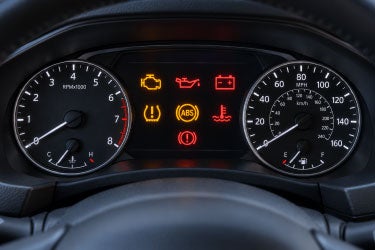
Red Warning Lights
Red means stop. Find a safe place to pull over, turn off the engine if you need to, and don't keep driving until you know what's wrong.

Brake System Warning
The parking brake is on, the brake fluid is low, or the brake system has a fault.
What to do:
Make sure the parking brake is fully released. If the light stays on, stop driving and have the brakes inspected.

Engine Oil Pressure Warning
Oil pressure is low. Without enough oil pressure, the engine can be badly damaged within minutes.
What to do:
Pull over and turn off the engine right away. Check the oil level. Don't drive until it's fixed. Call for a tow if you need to.

High Coolant Temperature
The engine is overheating. Common causes are low coolant, a leak, or a problem with the cooling fan.
What to do:
Pull over and turn off the engine. Never open the radiator cap while the engine is hot. Let it cool down, then check the coolant level.

Charging System Warning
The battery isn't being charged. The alternator, a belt, or the wiring could be the cause.
What to do:
Turn off anything that uses power and you don't need, like the A/C and radio. Head to a service center right away. The car may stall once the battery runs down.

Airbag (SRS) Warning
There's a fault in the airbag or seatbelt pretensioner system. Your airbags might not deploy in a crash.
What to do:
The car is still drivable, but the airbags may not protect you. Have it inspected as soon as possible.

Seat Belt Reminder
The driver or a front passenger isn't wearing a seat belt.
What to do:
Buckle up. If it stays on with everyone buckled, a heavy item on the passenger seat could be setting it off.
Yellow and Amber Warning Lights
These lights mean your Nissan has found a problem or a system needs attention. You can usually keep driving carefully, but have it checked soon.

Check Engine Light
The engine or emissions system found a fault. It could be a loose gas cap or a misfire.
What to do:
If it's steady, make sure the gas cap is tight and schedule a diagnostic. If it's flashing, slow down, don't tow heavy loads, and have it checked right away. A flashing light can mean a misfire that damages the catalytic converter.

Low Tire Pressure (TPMS)
One or more tires are low. If the light flashes for about a minute and then stays on, the TPMS itself has a fault.
What to do:
Check every tire and fill them to the pressure on the driver's door jamb label. On many Nissan models, Easy Fill Tire Alert honks the horn when you reach the right pressure.

Anti-Lock Brake (ABS) Warning
Flashing means VDC is working to keep you from skidding. Steady means the system is off or has a fault.
What to do:
If it flashes, ease off the gas and drive for the conditions. If it stays on and you didn't turn VDC off, have it checked.

Vehicle Dynamic Control (VDC)/ Slip Indicator
Flashing means VDC is working to keep you from skidding. Steady means the system is off or has a fault.
What to do:
If it flashes, ease off the gas and drive for the conditions. If it stays on and you didn't turn VDC off, have it checked.

Power Steering Warning
The electric power steering has a fault. Steering may feel much heavier than usual.
What to do:
You can still steer, but it takes more effort. Drive carefully to a service center. On some models this light shows up red.

Low Fuel Warning
You're getting low on fuel and dipping into the reserve.
What to do:
Fill up soon. Running the tank dry can strain the fuel pump.
Green and Blue Indicator Lights
These lights tell you a feature is on. There's nothing wrong.

High Beam Indicator
Your high beams are on. Switch to low beams when there's oncoming traffic or a car ahead of you.

Low Combat Temperature
The engine is still cold. This is normal on startup, and the light turns off as the engine warms up. If it stays on for a long time, have it checked.

Headlights/Low Beams On
Your headlights or parking lights are on.

Turn Signals/Hazards
Your turn signal or hazard lights are on. If it blinks much faster than usual, a bulb may be out.

Cruise Control/ProPILOT Assist
Cruise control or ProPILOT Assist is on. Keep your hands on the wheel and pay attention to the road.

ECO Mode
ECO mode is on. Throttle response and climate settings are adjusted to save fuel.
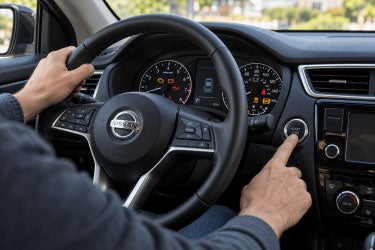
Every Light on at Once When You Start the Car?
That's normal. When you turn on the ignition, most warning lights light up for a moment as a bulb check, then turn off. Any light that stays on after the engine starts is the one to pay attention to.
Common Questions About Nissan Warning Lights
Can I drive with the check engine light on?
If it's steady and the car runs normally, you can usually drive for a short time. Schedule a diagnostic soon so a small problem doesn't turn into a big one. If it's flashing, reduce your speed and get it checked right away. A flashing light can mean a severe misfire that damages the catalytic converter.
Why does my tire pressure light come on when it gets cold?
Tire pressure drops about 1 PSI for every 10°F drop in temperature. On the first cold morning of fall, tires that were fine last week can fall below the recommended pressure. Fill them to the pressure on the driver's door jamb label. The light should turn off after a short drive.
What's the difference between a steady light and a flashing light?
A flashing warning light usually means the problem is more urgent. A flashing check engine light is more serious than a steady one. The VDC/slip light is the exception: it flashes while the system is helping you keep traction, and that's normal.
Can I reset a warning light myself?
Some lights turn off by themselves once the cause is fixed. The TPMS light goes off after you fill the tires, and the check engine light goes off after you tighten a loose gas cap and drive a few times. Clearing a code without fixing the problem only hides it, and the light will come back. Our technicians can read the stored code and tell you exactly what's going on.
What does it mean if the red brake light and the ABS light are both on?
When both lights are on together, the braking system may not be working properly. Pull over safely and have your Nissan towed or inspected before you drive it again.
Where can I find the exact warning lights for my Nissan model?
Symbols and colors can vary by model and year, especially on hybrid, e-POWER, and electric models like the LEAF and ARIYA. Your owner's manual has the full list for your vehicle. You can also call the Speck Nissan service team and we'll help you figure it out.
| Monday | 9:00AM - 7:00PM |
| Tuesday | 9:00AM - 7:00PM |
| Wednesday | 9:00AM - 7:00PM |
| Thursday | 9:00AM - 7:00PM |
| Friday | 9:00AM - 7:00PM |
| Saturday | 9:00AM - 6:00PM |
| Sunday | 10:00AM - 5:00PM |
| Monday | 7:30AM - 5:30PM |
| Tuesday | 7:30AM - 5:30PM |
| Wednesday | 7:30AM - 5:30PM |
| Thursday | 7:30AM - 5:30PM |
| Friday | 7:30AM - 5:30PM |
| Saturday | 8:00AM - 5:00PM |
| Sunday | Closed |
| Monday | 7:30AM - 5:30PM |
| Tuesday | 7:30AM - 5:30PM |
| Wednesday | 7:30AM - 5:30PM |
| Thursday | 7:30AM - 5:30PM |
| Friday | 7:30AM - 5:30PM |
| Saturday | 8:00AM - 5:00PM |
| Sunday | Closed |