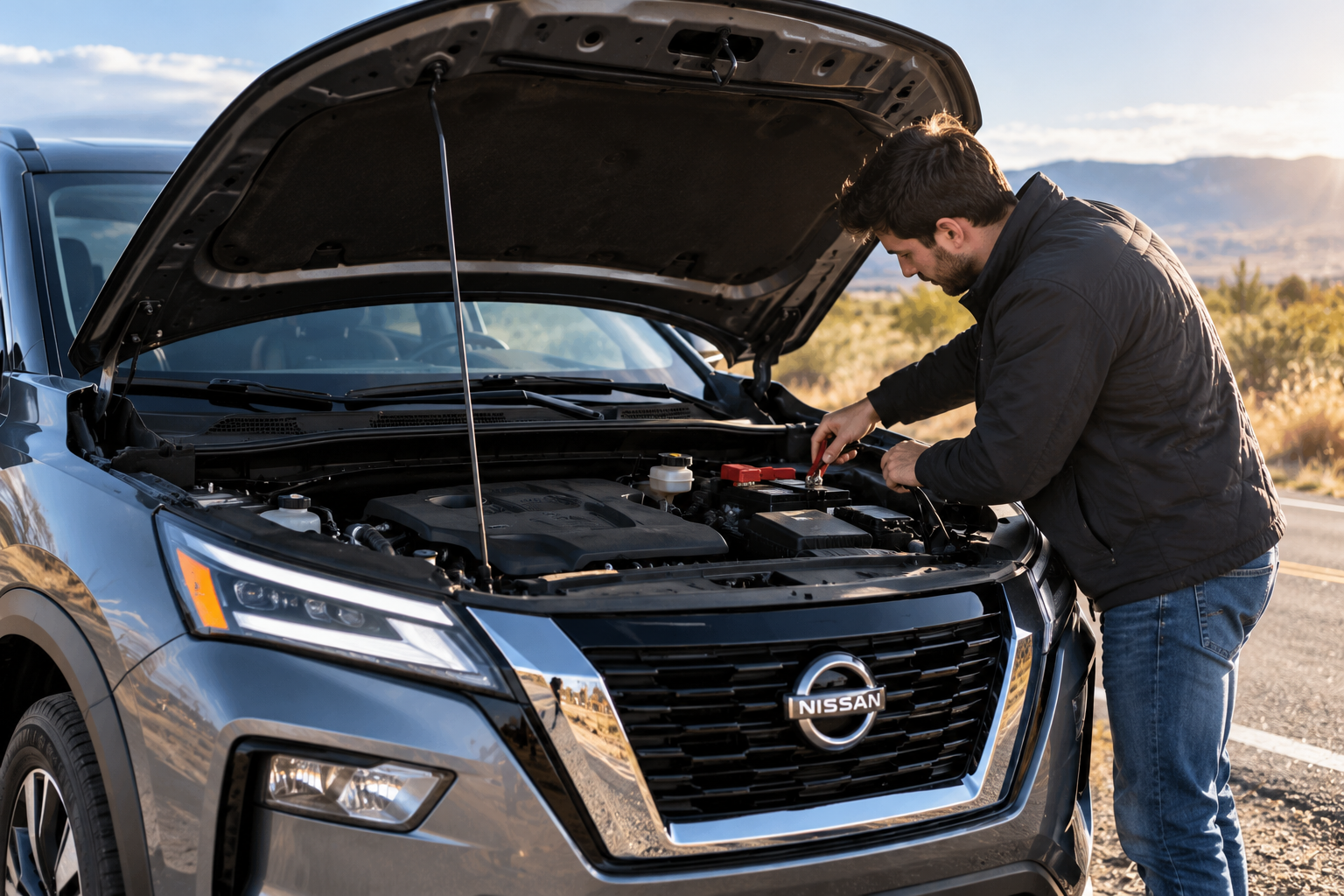
Nothing is more frustrating than turning your key on a cold Sunnyside morning and getting nothing but silence. Car battery problems in winter are one of the most common and most preventable vehicle issues our service team sees every single fall and winter season. Here is your complete guide to how cold weather affects car batteries from our team at Speck Nissan in Sunnyside.
The Science Behind Cold Weather Battery Failure
Cold Temperatures Reduce Battery Capacity
A fully charged battery at 77 degrees Fahrenheit delivers 100 percent of its rated cranking power. At 32 degrees that drops to approximately 65 percent. At 0 degrees Fahrenheit your battery delivers only about 40 percent of its normal cranking power. Sunnyside, Prosser, Kennewick, Richland, and Pasco regularly experience overnight temperatures dropping into the teens and single digits during peak winter months putting extreme demands on every vehicle battery in the Yakima Valley.
Cold Engines Demand More Power to Start
Cold temperatures cause engine oil to thicken significantly making your starter motor work much harder to crank a cold engine. Your battery must simultaneously deliver reduced cranking power while also working harder against a thicker and more resistant cold engine during every cold morning start. That combination of reduced battery capacity and increased starting demand is exactly why car battery problems in winter catch so many Sunnyside and Yakima Valley drivers completely off guard.
Summer Heat Does the Real Damage
Here is the most important thing most Yakima Valley drivers do not know about winter car battery care. The actual damage to your battery almost always occurs during Eastern Washington’s brutal summer months rather than during winter itself. Sunnyside, Kennewick, Richland, and Pasco regularly experience temperatures exceeding 100 degrees Fahrenheit causing battery fluid to evaporate and accelerating breakdown of internal lead plates. Your battery appears to function normally throughout summer but its capacity has been silently reduced by months of extreme heat exposure. Cold winter temperatures then push that already summer-damaged battery past its ability to crank your cold Nissan engine on a freezing Sunnyside winter morning.
The Three-Stage Eastern Washington Battery Failure Cycle
Stage 1: Summer Heat Damage
Extreme Eastern Washington summer heat silently reduces your battery’s internal capacity throughout June, July, and August without any obvious warning signs during warm weather operation.
Stage 2: Fall Warning Signs
As temperatures drop in October and November the summer-damaged battery starts revealing its weakness through slow cranking and hesitant starts on cool fall mornings in Sunnyside and the Yakima Valley. Many drivers dismiss these early warning signs rather than recognizing them as urgent signals that their battery needs immediate professional testing before winter arrives.
Stage 3: Winter Failure
Cold winter mornings push the weakened battery completely past its ability to crank your cold Nissan engine. The result is a car won’t start in cold weather situation that leaves you stranded on one of the coldest mornings of the Eastern Washington winter season.
Warning Signs Your Battery Is Failing
Slow or Labored Cranking
If your engine cranks more slowly than usual on cold mornings your battery is struggling to deliver adequate cranking power to your starter motor. Do not ignore slow cranking as it almost always progresses quickly to a complete no-start condition during the coldest Eastern Washington winter mornings.
Frequent Jump Starts
If your battery has required a jump start more than once this season it is almost certainly failing and needs immediate professional testing and replacement at Speck Nissan. A healthy battery should never require a jump start under normal everyday driving conditions in the Yakima Valley.
Battery Warning Light
A battery warning light on your Nissan dashboard indicates a problem with your battery or charging system requiring immediate professional attention. Have your battery and charging system professionally tested at Speck Nissan whenever your battery warning light appears during normal driving.
Electrical System Irregularities
Dimming headlights, flickering interior lights, and erratic infotainment behavior can all indicate a battery struggling to maintain adequate voltage. Schedule Nissan battery testing in Sunnyside at Speck Nissan immediately if you notice any of these electrical irregularities during your everyday Yakima Valley driving this fall or winter.
Swollen or Damaged Battery Case
Inspect your battery case for any visible swelling, bulging, or cracking that indicates heat damage from Eastern Washington’s extreme summer temperatures. A swollen battery case requires immediate replacement and is a genuine safety concern that should never be ignored.
Battery Age
Most car batteries last between three and five years under normal driving conditions. Eastern Washington’s extreme summer heat significantly shortens battery life beyond the national average making three years a meaningful inspection milestone for Yakima Valley vehicle owners. If your battery is approaching or past the three-year mark proactive car battery replacement in Sunnyside WA before winter is always the smartest investment.
What to Do If Your Nissan Won’t Start in the Cold
Step 1: Try to Jump Start
Attempt to jump start your Nissan using jumper cables or a portable lithium jump starter battery pack. If your vehicle starts successfully after a jump start drive directly to Speck Nissan for a complete professional Nissan battery testing in Sunnyside appointment.
Step 2: Check Your Battery Terminals
Visually inspect your battery terminals for obvious corrosion or loose connections preventing adequate current flow. Clean any visible corrosion using a wire brush and baking soda solution before attempting another cold start.
Step 3: Check Your Gear Selector
Verify your Nissan is completely in Park before attempting to start it on a cold winter morning. Try shifting to Neutral and back to Park before attempting another start if your initial attempt produced complete silence.
Step 4: Call for Professional Help
If jump starting and terminal inspection do not resolve your no-start condition contact our service team at Speck Nissan in Sunnyside or your preferred roadside assistance provider for professional help.
Winter Car Battery Care Tips for Yakima Valley Drivers
Have Your Battery Tested Before Winter
The single most important winter car battery care step any Yakima Valley Nissan owner can take is scheduling a professional battery load test at Speck Nissan before the coldest months arrive. A professional battery load test takes just a few minutes and gives you an accurate picture of your battery’s remaining capacity before winter temperatures push a weakened battery past its starting ability.
Keep Your Battery Terminals Clean
Inspect your battery terminals regularly throughout fall and winter for any corrosion buildup preventing adequate current flow. Apply a quality battery terminal protector spray after cleaning to prevent future corrosion buildup throughout the winter season.
Use a Battery Tender for Extended Parking
If you park your Nissan outside overnight during Eastern Washington winter months consider using a quality battery tender to maintain your battery at full charge throughout the overnight parking period. Connect your battery tender to a standard outdoor-rated 110-volt outlet before going inside each evening for maximum cold weather battery protection.
Park in a Garage Whenever Possible
Even an unheated garage is significantly warmer than outdoor overnight temperatures in Sunnyside, Prosser, Kennewick, Richland, and Pasco during the coldest winter months. A warmer battery delivers significantly more cranking power and experiences much less overnight self-discharge than a battery exposed to freezing outdoor temperatures.
Drive Your Vehicle Regularly
Short infrequent trips during winter months do not give your alternator adequate time to fully recharge your battery after each cold morning start. Try to take at least one longer drive of 20 minutes or more each week during winter to allow proper battery recharging between cold morning starts.
Nissan Battery Service at Speck Nissan in Sunnyside
Our comprehensive Nissan battery service at Speck Nissan in Sunnyside includes everything your battery needs for confident cold weather reliability throughout Eastern Washington winter. Here is what our complete battery service includes:
- Complete battery load test measuring actual cranking power output compared to rated specification
- Charging system test verifying alternator output voltage during normal engine operation
- Battery terminal inspection and professional cleaning of any corrosion present on both terminals
- Battery case visual inspection for swelling, cracking, and physical damage from summer heat
- Honest battery replacement recommendation with quality OEM-specification battery if needed
- Digital inspection report sent directly to your phone or email after every service visit
You do not need an appointment for a basic battery test at Speck Nissan. Simply stop by our service department during regular business hours and our team will test your battery quickly and give you an honest assessment of its condition and remaining capacity.
Schedule Your Nissan Battery Service at Speck Nissan
Is your Nissan battery ready for another cold Eastern Washington winter? Our certified service team at Speck Nissan in Sunnyside is ready to perform complete Nissan battery testing in Sunnyside and honest car battery replacement in Sunnyside WA if your battery needs replacement before winter arrives. Here is how to schedule your battery service today:
- Online: Visit our website and click “Schedule Service”
- By Phone: Call our service department directly
- Walk-In: Stop by during service hours for same-day battery testing without an appointment
Do not wait until a dead battery on a freezing Sunnyside winter morning reveals that your battery needed service months ago. Schedule your Nissan battery service at Speck Nissan in Sunnyside today and start every cold Eastern Washington winter morning with complete confidence.
Schedule Service
The information provided is for general informational purposes only and does not constitute legal, financial, or professional advice. While we strive to provide accurate and up-to-date information, we make no guarantees regarding the completeness, accuracy, or reliability of the information presented. Any action you take based on the context of this blog is strictly at your own risk. Always consult a qualified professional or specialist for advice specific to your situation. We are not responsible for any losses or damages arising from the use of this blog or its content.